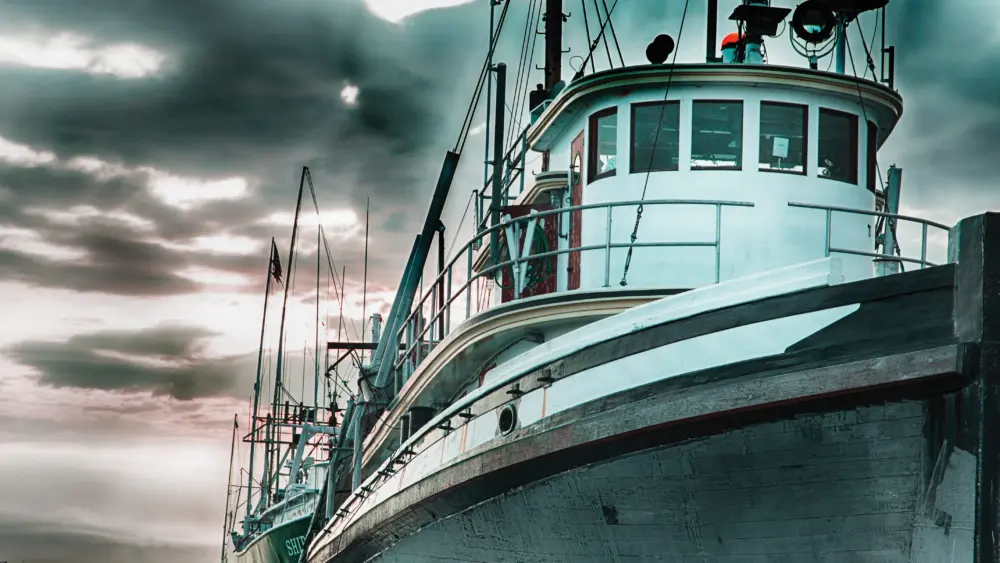


At Heritage Salvage, old wood is given new purpose.
Whether you’re building a deck, upgrading or building a restaurant, needing new office furniture or buying a nightstand, you don’t have to cut down a tree to make it happen. Buying reclaimed or salvaged wood instead prevents unnecessary logging and the associated greenhouse gas emissions. And by choosing recycled or composite alternatives, you can help steer the market away from destructive (and sometimes illegal) logging and toward more sustainable business practices.
This is the motivation behind Heritage Salvage, encompassing three acres on the southern edge of Petaluma, where you can find all manner of reclaimed building materials, flooring, wood slabs, hand-hewn beams, architectural pieces, reusable metals and a showroom full of unique pieces. A custom shop on premises produces made-to-order, reclaimed furniture for restaurants, businesses and homeowners. If you can draw it on a napkin or show a picture, Heritage Salvage can build it. The company prides itself on turning wood that might be called trash or junk into beautiful pieces of furniture, floors, siding and beyond.
Anthropologist Margaret Mead once said, “Never believe that a few caring people can’t change the world. For, indeed, that’s all who ever have.” The quote could easily describe 64-year-old Michael Deakin, founder of Heritage Salvage. Known to all as “Bug,” his passion is to help people discover the many ways we can all creatively reuse, recycle and repurpose wood and other materials from barns, wineries or, really, any old building. He named the company Heritage Salvage because, he says, “I love salvaging the heritage as well as the materials.”
An advocate for saving trees, Bug believes repurposing the materials found in these older structures to be one of the key components of the sustainability movement. He also has a passion for art, which, for him, includes planting trees, designing, building and remodeling custom homes, boats, movie sets, rock walls, gardens, parade floats, tree forts, dog houses, ship models, furniture and a splendiferous array of art forms from repurposed materials.
Bug’s inspiration
A native of British Columbia, Bug came from a family of 10 children and learned the value of recycling early on (he prides himself on doing this for work 45 years). He moved to Sonoma County in 1989 and opened Heritage Salvage in 2001. For Bug, every old structure has a story and, coming from a storytelling family, he loves finding out the history of the structures he’s repurposing.
“Bug fell in love with old buildings when he was still a child. He was always wandering off, climbing through old, abandoned farmhouses searching for treasure,” shares Heritage Salvage General Manager Karen Helms. “It was in his early 20s that he realized the treasure was the old building itself.” In 1970, Deakin built a squatters shack, out of an old Chinese tenement building from Vancouver, B.C., on Dollarton Beach at the (in)famous Maplewood Mudflats in North Vancouver, where he lived for many years. Over the years, he’s used reclaimed materials in most all professions, including building Hollywood sets.
In 2000, when a client asked him to build a custom home in Occidental that looked 100 years old, Bug put an ad in the Farmers Forum section of the Press Democrat: “Will take down old wood in exchange for cleanup.” He first got 36 responses, primarily from farmers and property owners who had old barns on their property. The first place he went was Fred MacMurray’s ranch in Healdsburg (now owned by Gallo); its wood became the floor of the custom home. The project marked the beginning of Heritage Salvage.
Though based in Petaluma, Bug continues to search far and wide for salvageable materials. In 2009, for example, he found an old corn mill for sale in Crestline, Ohio, originally built in 1869 using a variety of hardwoods and including hand-hewn barn beams (sought after for their raw, rustic feel). He purchased the mill and has slowly dismantled it. The materials have been arriving at Heritage Salvage ever since to become tables and other furniture pieces, as well as raw materials used to fulfill clients’ building desires.
From the very beginning of this venture, Bug knew there would be ecological benefits of reclaimed material taken from abandoned buildings no longer fit for safe human use, because making furniture, floors or decks with reclaimed wood and other materials means less waste ending up in landfills. Most of the three-acre Heritage Salvage site is covered with piles of soft woods from all over the West Coast (including redwood, Douglas fir, cedar, pine, Bay Laurel, eucalyptus and walnut) and Hawaii (Chocolate Heart Acacia, Mango, Monkey Pod and Poinsiana). Also available is hardwood from the Midwest, including oak, ash and elm, and hand-hewn beams from ancient structures in the Midwest (some as large as 12”x12”x30’).
One recent purchase includes all the framing materials, floor joists and wood rafters from the original Budweiser Clydesdale Barn in St. Louis. Bug gets excited about the wood’s history along with knowing it will be repurposed into furniture. The lumber was first used to build redwood water tanks in California, but as a result of Prohibition, the tanks sat empty for 13 years and weren’t reusable as tanks. They were dismantled by Anheuser Busch and used to build the barn. After Prohibition was repealed in 1933, the Busch family traveled the country with its first six-horse Clydesdale hitch, promoting beer and delivering one of the first cases to President Franklin D. Roosevelt.
The Heritage way
Helms, who’s been working for Heritage Salvage for seven years, comes from a background of cabinet building. When she first came for an interview with Bug and saw the place, she says, “I felt like I was home.” Helms loves the fact that you can take a piece of wood that has a rich history and turn it into a piece of furniture that can be used today. “Every time we get a load of wood and begin to repurpose it, I feel like we’ve preserved history and saved a tree,” she says.
She adds that Bug’s enthusiasm for what he’s doing rubs off on all the shop’s employees, which makes working there feel more like being part of a family rather than “just a job.” She also likes knowing that, because of what they’re doing, these old woods won’t end up as landfill. She also sees her job as educating people to look at old wood not as garbage but rather to use one’s creative mind to imagine the material as a new piece of furniture. For her, watching the old wood being repurposed creates a “wow” feeling that’s typically shared by clients when they pick up the product.
When you come to Heritage Salvage, it’s obvious the goal is good customer service. Everyone is welcome to visit the facility and take a tour (it’s open to the public Monday through Friday from 9:00 a.m. to 5:00 p.m. and Saturdays 10:00 a.m. to 4:00 p.m.). If you see a piece of wood you’d like to purchase and repurpose yourself, you can. Or the staff is always happy to listen to a customer’s plan, make suggestions or help create a design. “Every job is one of a kind,” Helm says, adding that every piece of wood is different, so every piece made is custom. “It gets me excited when I see how excited our clients get when beginning a project, because I know I can help them,” she says.
Helms believes it’s important for people to recognize that wood on the side of an old house isn’t trash and shouldn’t be thrown away. “It should be seen as a resource that can be used in a new and creative way, and we’re here to make that happen.” She’s happy to see people becoming more aware of the beauty and value of old wood.
When touring the facility, one becomes engaged in learning about the history of the wood and projects that are taking place. Wood slabs are repurposed into tables, chairs, cabinets, frames and floors plus anything else a client might have in their imagination.
Tresea Helbing, office manager, is one of the newer staff members. When she started six months ago, she knew nothing about wood but found herself, “caught up in the excitement that Bug has around wood.” It never occurred to her that you could find a 100-year-old beam and turn it into something new and beautiful. But now, she believes she’s more than an employee. “We’re doing something that will benefit generations to come,” she says.
“My employees are like family to me,” Bug says with a sense of pride. A good example of that is when his assistant manager, Heather Gallagher, was expecting her daughter, Athena, and thought she’d have to quit her job. When she told Bug, “By the time I find a sitter and drive back-and-forth dropping her off and picking her up, it won’t be worth the pay.” Bug decided to do things the old fashioned way, and put a crib in the office. “I was able to continue working and take care of my child at the same time,” shares Gallagher with appreciation.
Satisfied customers
Pablo Scurto knew Bug from when he frequented Scurto’s father’s restaurant, Tres Hombres Long Bar and Grill in Petaluma. When Pablo and partners Gray Rollins and Mike Ward decided to open Belly Left Coast Kitchen & Taproom in Santa Rosa, they wanted to achieve a rustic, organic look. Knowing Bug’s background and that he was responsible for remodeling more than 70 restaurants over the years, Scurto asked Bug to help him design the interior and make tables, chairs, a bar top and overhead beams. The wood used on the bar top is Chocolate Acacia from the big island of Hawaii, and the tables are made of Douglas fir. The table legs in the dining area are made out of welded metal and the face of the bar and walls are lined with rusty, corrugated metal also provided by Heritage Salvage. Other sourced materials include pickle barrels for kitchen wall treatments, reclaimed Tamarack from a 160-year-old Washington State barn and window grates from the Fort Baker jailhouse for patio treatments.
When his partners first saw some of the woods that would be used, their initial reaction was, “Are you kidding?” But when the project was done, both formed a new perspective. Bug always likes it when that happens.
Along with creating beautiful furniture, Bug and his staff are easy to work with. They listen to what your needs are and the outcome is exactly what you want. “We live in a throwaway society, and it’s a good feeling, when you’re serving people, to know that you might have saved a tree by continuing to give old wood new life,” says Bug.
Rosalyn Brandt, owner of Rosalyn Brandt Design Associates in Tiburon, is a commercial interior designer and space planner who works with corporate, medical, financial and government arenas. Many of her clients are looking for a clean, organic look for their offices and business. She likes working with Heritage Salvage because whenever she comes to them with an idea or request from a client, they never say, “I can’t do it.” Rather, they work with her to bring the vision to life. “Whatever you bring them, they find a way to make it happen and turn out beautiful products. In my mind, they win on every score,” says Brandt.
She discovered them when she began a design project for Quintessa Winery/Huneeus Vintners in St. Helena. The winery wanted to have a natural look with an industrial flavor for its corporate office in Napa. To achieve this look, it wanted to use salvaged wood—which led Brandt to Heritage Salvage. They worked with her from design to finish using both oak and ash for common areas, break rooms and the many components that required wood. Brandt also incorporated many innovative aspects that have surged through the design industry, including energy conservation, ergonomics and selection of environmentally sustainable/eco-friendly construction products and finishes; Heritage Salvage was “instrumental in helping to achieve this environmental goal,” says Brandt, adding, “people like Bug and Karen make working on a project easy, fun and educational.”
Rob Lippincott, owner of The Parish Café in Healdsburg, was born in New Orleans and missed home. He wanted to open a restaurant with traditional New Orleans food. Starting out at farmers markets selling beignets, his customers soon encouraged him to open a restaurant that offered New Orleans-style cuisine. He rented an old Victorian house in Healdsburg that was built in 1860 and set about trying to capture the feel of New Orleans. When Heritage Salvage was recommended to him to help with design and obtaining the woods he’d need for tables and chairs, he was struck by the variety offered. He found Bug and his staff listened, drew sketches and suggested woods that would fit his vision. “Their customer service is as good as the quality of the product itself. They give you a personalized experience,” says Lippincott.
The Heritage Salvage team was able to help Lippincott with the design of the furniture and to build his dining room tables and floors out of Douglas fir that came from Valencia Garage in San Francisco. The wood was from the same time period as the Victorian. “I’m proud to have the wood. I enjoy the history and see it being reborn in my restaurant, providing warmth, character and soul for people.” He was thrilled that Bug was able to find salvageable white oak from a building that was built in the 1890s to use for his outdoor patio dining tables (they’re big enough for family dining). He also notes that, because of using repurposed wood, he saved money in the long run. “If you’re looking to capture the true essence of what wood can do for your business, your room, your restaurant or your home, there’s nothing like reclaimed wood. It’s the real deal,” he says.
“People are beginning to get it,” says Bug of his salvage’s seemingly sudden popularity. “Everyone now is getting hip to the fact that the best way to design is to use what’s already available. Restaurants are sustainable in food, and now in décor, too. It’s sustainability squared.” Even big corporations are beginning to get it—he recently outfitted two Starbucks locations, one in Petaluma and one in Novato.
Beyond the salvage yard
While Deakin and his team teach the value and beauty of reclaimed lumber and run a sustainable business, they’re also intimately involved in their home community. Heritage Salvage gives back in the form of donating materials and garden beds to local schools and charities, including Petaluma Bounty, and, “we’re integrally involved in community events throughout the year.” says Bug. It seems to be a successful combination.
In July 2012, Heritage Salvage announced its expansion to the Takahashi Building at 15th and Kansas streets, around the corner from the San Francisco Design Center. The company will share space with INJA Furniture Wholesalers and Manufacturers. Exotic wood slabs and reclaimed wood flooring can be purchased at the site, as can custom furniture orders including tables, benches and mantels.
You can hear Bug on KSRO “The Drive” with Steve Jaxon at 5:30 p.m. every Tuesday for “Reclamation Road Radio!” A natural storyteller, Deakin enjoys sharing tales about places he’s traveled to find salvageable wood along with sharing projects and information.
Speaking of stories, no one I talked with knows how Deakin came to his unique nickname. When asked, Bug assured me there’s a great story behind it. I hope I’m invited when he decides to let us all know.