Some North Bay farmers concentrate on the varieties within a single crop to distinguish themselves.
Amid farmers markets tables laden with a cornucopia of fresh fruits and vegetables in all colors of the rainbow, shoppers may notice more than the sweet perfume of fresh, summer strawberries or the pungent aroma of spicy arugula. They may see a few tables with seemingly little variety. Yet on closer inspection, consumers notice a wide variety within a single type of produce—whether it be 10 different types of mushrooms, a dizzying array of greens and sprouts, potatoes with names like “Bintje” and “Purple Majesty,” or species of garlic unbeknownst to the supermarket set (there are said to be more than 600 cultivated subvarieties of garlic in the world).
Why do some farmers try to grow every type of produce imaginable, whereas others have an innate desire to focus on one specific crop, sometimes growing dozens of different varieties of the same one?

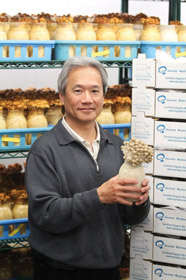
“Looking at Earth’s population going from 7 billion today to 9 billion in 40 years, how are we going to feed the next 2 billion people?” Law asks. “Agriculture as it’s practiced today is already taxing the environment substantially. Seventy percent of all the water humans consume goes into agriculture, and 40 percent of the landmass is used for cultivation and grazing. So, there’s very limited land and environmental input to produce more food. We have to look at efficiency and alternative crops.”
Gourmet Mushrooms Inc.’s production is truly a full-circle, sustainable and environmentally friendly system. Law starts by creating the substrate (the “food” the mushrooms need to thrive) by using wood shavings and agricultural byproducts like soybean hulls and corncob from both local and Midwest-based agribusinesses and farm suppliers. This substrate is packed into safe, non-reactive, polypropylene bottles that can be used repeatedly. The substrate-filled bottles are then steam sterilized in an autoclave. After cooling in a clean room, the bottles are inoculated with mushroom spawn to start the growth process.
Mushroom mycelium grows through the substrate material in the bottles over a period of three to 12 weeks, depending on the species. When the bottles are ready, they’re prepped and sentto the harvesting rooms for fruiting and harvesting. All the water needed is what’s put into the substrate material or used to maintain humidity and wash down. There’s no need to water the crops at all during the growth process.
Once the mushrooms have been harvested, the spent substrate material is extracted and sold to a local soil amendment company that, in turn, sells it to local farmers to be used as compost for botanicals and agriculture.
“If you think of it from an environmentally friendly process, we start with agricultural waste, we extract a good quality product—mushrooms—and then we put the material back into the soil as compost,” explains Law. “There’s no waste in our production.”
Founded in 1977, Gourmet Mushrooms Inc. today grows more varieties of organic culinary and nutraceutical mushrooms than any farm in America. It harvests nine varieties of organic specialty mushrooms for America’s finest restaurants, specialty food wholesalers and gourmet grocers and has experienced fast-paced growth, harvesting mushrooms 365 days per year. And it’s recently expanded, building a plant three times larger than its Sebastopol facility in Michigan, which will go into production later this year.
“My thought was basically that mushrooms are a very productive and environmentally friendly product, because we harvest mushrooms every day,” says Law. “Compared to a hectare of land growing rice, you get about $2,000 worth of rice in a year. If you have a hectare-sized mushroom farm that can be harvested every day, you can produce close to $1 million for the same acreage. It’s a big difference.”
A natural tendency
Many farmers in the North Bay specialize in certain crops simply due to the nature of the many microclimates in this area. Climate, soil and topography can differ widely from acre to acre in some parts, and crops naturally grow better in some areas than others. The foggy, coastal regions in West Sonoma County are more conducive to dark, leafy greens and potatoes, for example, than sun-kissed Cloverdale, which is significantly hotter than any other city in Sonoma County and is more favorable for heat-loving tomatoes and peppers.
Obviously, another significant player is rainfall. Much of Sonoma County receives between 25 to 30 inches of rain per year. However, some areas, such as the northwest portion of Sonoma County around the Russian River, receive significantly more. The Cazadero region near Guerneville is the second-wettest place in California, receiving an average 72 inches of rain per year (and many years easily topping 100 inches).
Farmers in these microclimates often learn what grows best simply by trial and error, adjusting their crop selections based on favorable yields and, of course, consumer demand.


“One of our specialties is dry-farmed potatoes,” explains Jesse Pizzitola, owner of First Light Farm. “This means we don’t irrigate them. It’s a special process and definitely limits where you can grow. We can also grow kale all summer long [on our property in Valley Ford]. It’s a cool weather crop, so usually people don’t grow it in summertime.”
Not only is the dry farming process environmentally friendly by not exploiting water resources, but it also yields a more nutritious and delectable product.
“They’re very different than regular potatoes,” explains Pizzitola. “When you don’t water a plant, the roots have to go down deeper into the soil to get water than they would have otherwise. When roots go deeper, they encounter more minerals and nutrients, bring them up to the surface and deposit them in the tubers. On top of that, a dry-farmed crop produces about half the quantity of an irrigated crop, so you have those additional nutrients concentrated in less tubers. It creates a different quality of potato that people love.”
Variety by default
Ironically, sometimes simply a lack of supply, coupled with an increase in demand, can be the catalyst for farmers diversifying their specialty crops.
“Have you heard that there’s actually been a kale seed shortage?” Pizzitola asks incredulously. “I can’t believe it! When I started farming 12 years ago, no one ate kale. When I told the old timers I was growing kale, they laughed. They used to grow kale as chicken feed. They didn’t even process that it might be consumable by humans. Now, I just can’t believe how it’s taken off. The two varieties that we grow a lot of, I can’t get the seed for. I’ve tried every possible seed supplier in the country. So, I’m trying some different varieties to see how they do.”
Certainly, changing trends in consumer tastes, cuisines, health and nutrition—especially in our local foodie culture—have lent themselves to offering opportunities for crop specialization, sometimes even in crops that consumers had previously never heard of. Such is the case with Yael Bernier, co-owner of Bernier Farms (along with her husband, Paul, and their son, Zureal), north of Healdsburg, who started growing garlic in 1974 and now offers 15 varieties of the aromatic root.

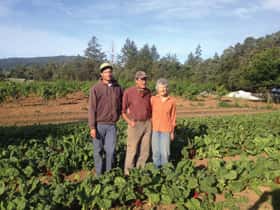
As consumers gain more knowledge about crop varieties, while at the same time getting disheartened over the limited supply of produce in the traditional food system, they will—and have—sought out these specialty farmers, who can offer unfamiliar varieties of vegetables.
“People are pretty savvy in Sonoma County,” says Bernier. “This is a mecca for food. It wasn’t always like that, though. That’s something that’s only happened in the last 10 to 15 years. We haven’t always had good restaurants, but now we not only have good restaurants, many of the restaurants support local farms by purchasing fruits and vegetables directly or at the farmers markets.”
Given the success of farmers who specialize, would it be wise for others to follow suit? “That’s one of the tools that we, as smaller farms, can use to stand out,” says Pizzitola. “We can grow all these varieties that taste different, which is really cool for food awareness—for the taste buds and understanding that not everything has to be the same all the time. That’s one of the many advantages to growing in this way.”

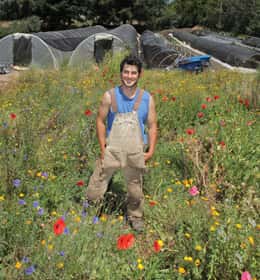
“Throughout the year, there are approximately 50 different varieties of greens and edible flowers that comprise my selection at the farmers market, and I’m always trying to increase that number,” says Macros. “I’m always on the lookout for interesting varieties of non-GMO, organically grown seeds from seed companies, local seed savers and on-farm seed saving. That’s definitely part of the appeal—the surprise factor that greets customers when they first see the weekly selection.”
If the line of customers waiting to purchase his freshly harvested sunflower sprouts at a recent Sebastopol farmers market is any indication, specializing can certainly pay-off.
Full Bloom Farm
By Alexandra Russell

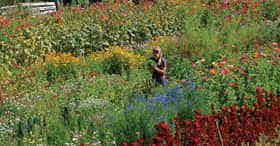
After attending UC Berkeley, Brorstrom took a position as a garden instructor at Commodore Sloat Elementary School in San Francisco, where she managed an ever-changing garden and about 400 student helpers. She loved it, she says, but an apprenticeship at UC Santa Cruz’s Center for Agroecology and Sustainable Food Systems changed her career path and sent her back to ground zero—literally: “That’s where I really fell in love with flowers.”
Brorstrom is now a “farmer/florist,” nurturing more than 80 flower varieties on about half an acre of the former worm farm, which is still owned by her family (though no longer open for business). “A lot of microfarmers around here cultivate one to five acres, but flowers are different than produce,” she explains. “It’s not like a lettuce, which you harvest once per season. Flowers continue to produce for months. So my little farm is really enough.”
She begins with seeds in March and April, and peak bloom season is June through September. “I really like bright flowers,” says Brorstrom, “and I love dahlias. But I’ve also started planting a lot of darker blooms, because they’re really popular. I have sunflowers in every color, from traditional yellow to deep, dark reds. And I’m currently obsessed with cockscomb.”
In addition to selling fresh flowers at the Sebastopol farmers market and creating arrangements for restaurant clients and blushing brides, Brorstrom offers a CSB (community supported bouquets) program that makes her “feel like I’m playing cupid.” She also creates wreaths and other products from dried flowers, which extends her selling season well into winter. She’s also studying at the California School of Herbal Studies in Forestville and plans to expand her plantings to include both medicinal and culinary herbs.
Though not open to the public, she welcomes visitors when possible and occasionally hosts workshops on flower- and garden-related topics (wreath making, medicinal herbs, flower arranging).
Brookfarm Alpacas
By Alexandra Russell

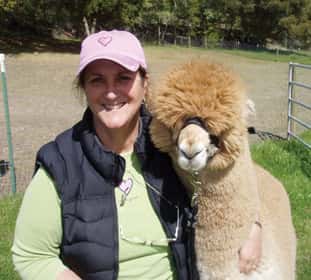
“Mark has always lived here, except for a few years when we were first married, and we’ve always had animals, but they were mostly our kids’ 4-H projects—pigs, goats and rabbits,” says Debbie. “We were hobbyists. But then we wanted to find a way to make the property work for us.”
At about the same time, her adult daughter, Sarah, had introduced Debbie to knitting, and the two became increasingly drawn to fiber farming. Before long, the pair were visiting alpaca businesses throughout Northern California and hatching a plan to revitalize the operation as Brookfarm Alpacas in the Valley of the Moon (Brookfarm was the name of the original egg business).
“Alapcas are truly green animals,” says Debbie, when asked about the appeal of the domesticated South American creature. “They’re gentle and quiet, and they’re very easy on the land. They don’t have hooves, just soft pads, so they don’t tear up the fields like a cow or horse. And they graze gently, too, which means they nibble the grass instead of pulling it up from the roots. They even have community poop piles—and their ‘beans’ are fully digested, which means it can be added directly to the garden or compost without needing to be processed first. It’s called ‘alpaca gold,’ because it’s a rich soil amendment.”
Today, Brookfarm sells multiple weights (quality grades) and assortments of 22 natural color alpaca yarns, as well as roving and unprocessed fiber, and offers a fiber CSA. Products are available for knitters, home spinners, weavers and felters through Etsy (as Brookfarm) and at the onsite farm store. “We have enough animals that we can package our yarns with a specific animal’s face on the label,” says Debbie. “People love that, because then they’re buying the story, not just the fiber.”
It also offers alpaca beans, boarding and breeding services (many of its animals are grand sire champions), and sells crias (young alpacas). Visitors are welcome with a call or email in advance.