Things have changed since the old days of Larkspur Landing.

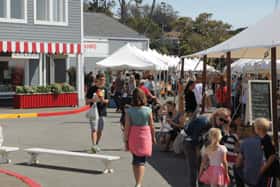
And everywhere, there are people. Some are clearly Marinites, wearing yoga pants, powered by copious amounts of coffee and toting cups of back-up java. Others have traveled here—including the group walking across the pedestrian bridge from the ferry landing, wearing backpacks, sandals with socks and carrying guidebooks promising the “real Marin” experience: “You will know the natives by their speech, which includes odd pairings of words like ‘spiritual’ and ‘property values.’”
At any rate, the place is anything but laid back on this Sabbath. Things have changed since the old days of Larkspur Landing, a shopping center that struggled for shoppers on such a grand scale that, when it was purchased in 2009, the majority of the space had been converted to office or big box retail use.
Gone are A Clean, Well-Lighted Place for Books; Games and Things; and the Ragged Sailor. In their place come Diesel, A Bookstore; Tutu School; and Intermix.
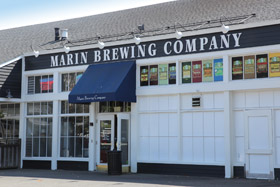
The center has undergone significant change, thanks to a multimillion-dollar facelift that Mickey Rourke wishes he could call his own. The plaza is the centerpiece, where you can find some entertainment, and the parking surrounds the place. Store spaces, for the most part, are small, giving the place the feel of a downtown rather than a mall.
It’s not easy to slap a label on Marin Country Mart. It’s not a power center like Vintage Oaks in Novato, with its Target and Costco anchors. Nor is it a lifestyle center like The Village in Corte Madera, with Nordstom and Macy’s. And it’s not a regional mall like Northgate, with everything inside and parking surrounding it like an ocean of steel and rubber.
Instead, it’s a collection of boutiques, eateries and services. There are chains like Starbucks; Bed, Bath & Beyond; Togo’s; Diesel, A Bookstore; and George. But one of the things that sticks out the most is that you don’t find the regular mall rats here. There isn’t a Gap in sight, nor does a Radio Shack darken the place.
“The artisans and entrepreneurs who comprise Marin Country Mart have been mindfully chosen to provide a diverse blend of purveyors that reflects the tastes and preferences of Marin residents and visitors,” reads a partial description from J.S. Rosenfield & Co., which owns and manages the center. It points out that the merchants and eateries “all are best-quality, best-value offerings that are exceptional, unique and capable of delighting customers.”
One thing you can say is that it’s a tough place to shop for a bargain. How tough?
Take a stroll into Belcampo Meat Co., a unique eatery where you can dine on organic meat raised on the company’s Northern California farm. It does breakfast, lunch and dinner and sells fresh, hand-cut meat. If you’re in the mood for a melt-in-your-mouth, grass-fed rib eye, you can take some home for a cool $34.99 per pound.
I love steak and grilling, but at $35 per pound, the steak will need to grill itself and you better toss in a bottle of decent red wine.
In the beginning
James Rosenfield has always liked the Bay Area. He worked for the late Congressman Tom Lantos of San Mateo (as well as Senator Edward Kennedy) in Washington, D.C., and went to school at UC Berkeley. He was also influenced by his friend, James Rouse, owner of The Rouse Company, a large real estate developer based in Southern California.
A Ross resident now, Rosenfield grew up in Southern California and had always had a soft spot for the Brentwood Country Mart, a retail property that had long been the toast of the Hollywood set, with the likes of James Dean, Gregory Peck, Elizabeth Taylor and other Hollywood royalty adding a celebrity cache to a shopping center that also hosted community events. Rosenfield, 52, turned it into a retail village and gathering place. In the process, he developed a key strategy that would serve him in Los Angeles as well as Marin.
The deal
Though Rosenfield had lived in London, Los Angeles and San Francisco, he’d never fully cleared Northern California from his bloodstream. “The truth is, I was looking for a reason to live here,” Rosenfield says, as he’d been looking for a property casually for years.
The vacancy factor is important for a developer or retail player looking to remake a center. While there are always retail tenants that make sense to keep around due to their drawing power or their contribution to the business mix and retail identity, it’s also important to have space to bring in fresh stores or restaurants. This is especially true if one of the drivers of the acquisition is to reposition the property.
J.S. Rosenfield also owns the Brentwood Country Mart as well as the Montecito Country Mart. In each case, the barn-like centers are located in communities where the residents make enough to shop for some of the finer things.
In 2007, he drove from San Francisco to St. Helena with a game plan to take each exit off Highway 101 until he found a property that spoke to him. When he hit Larkspur Landing, he heard the voice. Rosenfield called his architect and asked to meet. The architect agreed with Rosenfield that the center had bones that would work.
As luck would have it, the economic crisis was in full bloom, and banks had no intention of loaning money to buy commercial real estate after that sector had led the meltdown in the first place. But for Rosenfield, who’d always had financial backers and a good relationship with his bank, financing wasn’t the issue. The center wasn’t on the market, which meant he needed to make an offer that would get the attention of then-owner, Inland Western Retail Trust.
At the time, Inland was the largest operator of strip shopping centers in the country, but that didn’t seem to make much difference when it came to Larkspur Landing. The economy was in the tank and, because of the trouble it was having keeping Larkspur Landing leased out, Inland had decided to convert some of the empty shopping space from retail to office. By the time Rosenfield and Inland were exchanging numbers, just 40 percent of the center was retail, with the rest inhabited by folks carrying briefcases.
The bad news for Rosenfield was the office space was let at high rents and, at a time when retail centers all over the country were struggling, Larkspur Landing was generating considerable income despite the unorthodox tenant mix.
In 2009, he bought the center for $65 million. “We paid more than the center was worth in 2009,” he says. Even with the absence of crisis discount, Inland didn’t exactly make a fortune on the sale. It had purchased the center for $61.1 million five years earlier.
When the Rosenfield group bought the center, there were plenty of retail and real estate types in Marin who thought the purchase was a mistake. “A lot of people thought we were crazy,” Rosenfield agrees.
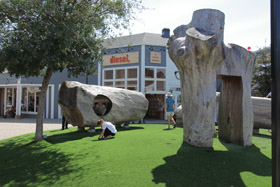
The vision for the center was to create not only a shopping destination, but also a place for people to congregate. Rosenfield believes that, while businesses are built on the idea of being profitable, the bottom line must also include adding social and economic value to the community. The center now has 173,000 square feet of space in a dozen different buildings and includes a children’s playground and picnic furniture.
The center took a chance by removing trees, an offense that can put one on the outs with lovers of the environment. But the trees blocked views of Mount Tamalpais and the bay. Sensitive to the community’s earth-first feelings, Rosenfield balanced the environmental books by planting 40 trees around the center (more than four times what was removed).
Rosenfield has done his best to make the center a weekend must-do, with a farmers market on Saturdays and the Off The Grid food truck rodeo on Sundays. The events help create a sense of community while bringing in customers beyond the center’s core group.
“We wanted to be a part of the community, and we never would have taken this on if [my family] weren’t going to live here. It wouldn’t have worked,” Rosenfield says. “I think Marin was in need of a place like this.”
The Usual Unusual Suspects
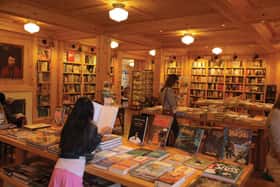
How else do you explain that, of the three centers he operates in Larkspur, Montecito and Brentwood, there are a number of stores that are found in all three locations. “We don’t look at our retailers simply as tenants; they’re our friends and extensions of our family,” he says.
We’re not talking about the usual suspects, chain stores that can be found in Plano, Tex., and Seattle, Wash.—retailers that are so common they’re in danger of becoming stereotypes even as they try to sell you blue jeans and coffee.
No, Rosenfield has brought in retailers like high-end makeup outlet SpaceNK Apothecary, eyeglass retailer Benjamin Optique and men’s clothier Unionmade, among others, to his centers.
Other retailers who’ve found a home in other Rosenfield centers and are also in Marin include James Perse; Malia Mills; Poppy Store; Intermix; George; Diesel, A Bookstore; Calypso St. Barth; Roberta Roller Rabbit; and the eatery, Farmshop. The stores have a few other things in common. They tend to be upscale in price, boutique in size and trendy in style, with an occasional attitude thrown in for fun.
Malia Mills is an example of the type of store that resonates in Country Marts. The boutique sells women’s swimwear geared toward a more custom fit, trying to give comfort to women from both a fit standpoint as well as a body image angle. Some of the company’s ad copy reads: “To thousands of women across the country, Malia Mills is nothing short of a modern savior. When she began her swimwear company, she started a veritable body image revolution.”
Starting a revolution is no small feat. Being a savior is even tougher, just ask Colin Kappernick.
Lest the gents feel left out, Unionmade can help with everything from Gant polka dot shorts tailored in a classic fit perfect for casual as well as more “formal settings,” to an assortment of bird calls. It also boasts a selection of cashmere stocking caps to keep that winter chill off your noggin when the mercury plunges.
And who doesn’t need a cashmere stocking cap?
George Is for the Dogs
By Duke

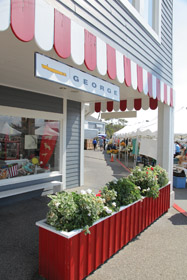
So I can walk around, sniffing anything I run across, and nobody looks at me twice. And believe me, there are plenty of things to explore.
Located at Marin Country Mart, on the water side, the store is not real big. It’s kind of like a couple phone booths had a baby, then the kid stumbled on Barry Bonds’ trainer and got on the clear. They call it a boutique, which I think is French for “midget.”
You know what I’m saying.
George is a chain, I’ll cop to that upfront. But it’s a really tiny chain, just four stores including the one in Larkspur. The others are in San Francisco, Berkeley and Santa Barbara. And the stores are named after the owner’s dog, which isn’t how Petco got its name.
The thing is, I’ve lived a life and visited a few stores that said they were dog-friendly. Sometimes they stock some food, a few treats and some chews and they think they’re a damn dog palace. Hello, PetSmart.
George has beds that are made of soft stuff that doesn’t smell bad, and when your nose is really sensitive, it makes a difference. The store also has collars with some dignity and panache. Not to put too fine a point on it, but almost every dog wears a collar, and it’s a little embarrassing when you’re at the dog park and three dogs are standing around wearing the same collar.
A word about the food bowls: We dogs have a reputation for eating anything you give us, or anything that falls on the floor. Sometimes we eat what we find on our walks, or maybe what you leave on the counter. OK, I see where you might think we’re indiscriminate.
But the bowls George sells actually make the food taste better. And when you’re dining on meat byproducts and bonemeal, that’s kind of big deal.
To sum up, I don’t do a lot of shopping, but I give George one paw up.
Bill Meagher is a contributing editor at NorthBay biz. He writes the Only in Marin column and is an associate editor in The Deal’s West Coast office in Petaluma where he covers small cap equity and does investigative work. He’s putting the finishing touches on his first novel, a political murder mystery set in Marin.