Vote with Your Wallet
Savvy shopping app Buycott helps you organize your everyday consumer spending so you can fund causes you support and avoid funding those you disagree with. Available for download on iPhone and Android, use Buycott to scan the barcode on any product; the free app will trace its ownership all the way to its top corporate parent company, including conglomerates like Monsanto or Koch Industries.
Even more impressive, you can join user-created campaigns to boycott business practices that violate your principles. The Demand GMO Labeling campaign, for example, will tell you if your breakfast cereal was made by one of the 36 corporations that donated more than $150,000 to oppose the mandatory labeling of genetically modified food. Among other campaigns are ones focused on ending animal testing and child labor.
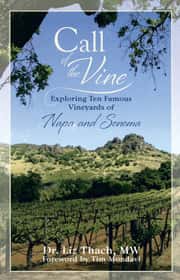

Much has been written about family farming histories in the North Bay and the fine wines that have resulted from generations of attention and innovation. Much less has been written, however, about the vineyards themselves—the soil, planting, orientation, irrigation, frost protection, sustainable and biodynamic methods, and general management of the plants that produce the fruit we all love once fermented.
Enter Liz Thach, MW, a professor of management at the Wine Business Institute at Sonoma State University. In 2000, while watching tourists posing in front of famed French vineyards, Thach realized “there are many famous vineyards in California, and they, too, deserve some respect and recognition,” she writes in her new book, Call of the Vine: Exploring Ten Famous Vineyards of Napa and Sonoma.
The book spotlights five vineyards per county, each representing a different AVA and chosen with input from Napa Valley Vintners, Sonoma County Vintners and Sonoma County Winegrowers. The final selection includes Napa’s Beaulieu (Rutherford AVA), Diamond Creek (Diamond Mountain), Stag’s Leap (Stags Leap District), Stagecoach (Atlas Peak) and To Kalon (Oakville), and Sonoma’s Bacigalupi (Russian River Valley), Hanzell (Sonoma Valley), Hirsch (Ft. Ross/Seaview), Monte Rosso (Moon Mountain) and Seghesio (Alexander Valley).
But rather than perpetuate the outdated “us vs. them” mentality, Thach organizes her profiles not by county or even varietal but rather by season. “Not only does this highlight the beauty of the vines during their major cycles, but it signifies some of the unifying characteristics of the great vineyards that grace both valleys.”
Each profile is told in a fast, friendly tone and includes history, descriptions and details of the vineyards and properties, as well as statistics for the more science-minded (soil structure, elevation, average temperature, tons per year and such) and a conversation with a winemaker and tasting notes for one of the vineyard’s signature wines. It’s an informative and enjoyable read…and we can’t wait for Volume 2!
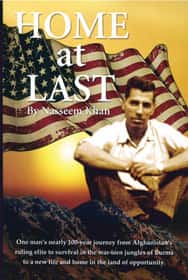

Every now and then, you find a story that’s so fantastical, it’s hard to believe it’s true. This is one of those stories.
Home at Last is the story of Windsor-based author Nasseem Khan, one of the few living survivors from the bloodline of Amanuallah Khan (the last king of Afghanistan). Born into luxury as part of the royal family, as a young boy, Khan experienced extreme political persecution in Afghanistan before fleeing the country with his relatives following a political coup.
Relocated by the British government to India and later Burma, he grew to manhood in the midst of World War II, built and lost fortunes (and built them again), lost family and friends, and found true love. Always an entrepreneur, Khan came to America in 1964 to start anew with his young family. Arriving with only $9 to his name, he again overcame overwhelming odds to find success and—finally—home.
Now 90 years young, Khan’s life story is both inspirational and poignant. A recommended read.