“We’re a very social club and the members here become lifelong friends.” —Don Floriani

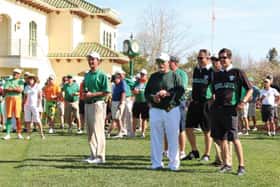
The club was initially founded in 1916 and became incorporated in 1921. After beginning as a nine-hole course in Los Alamos, the club moved to its current location in the mid-1950s with a single-story clubhouse and full-service facility. Currently, the country club has a restored, traditional design 18-hole course and a new clubhouse, which was built in 2002, offering banquet and meeting rooms as well as a gym for its members.
Being a private club has multiple advantages over a public course. Brian Ling, president of the club and executive director of the Sonoma County Alliance, explains that a public course sees around 80,000 rounds of golf per year. SRGCC takes on about 24,000 rounds per year, enabling members to play anytime they desire. “We’re unique and that’s our culture,” says Ling, “You can walk on any day of the week with very little waiting.” A usual round of golf takes no more than four hours, whereas a public course can range anywhere from five to six hours.

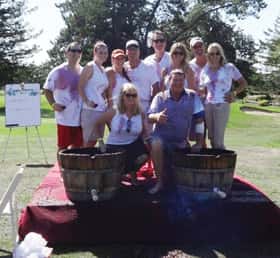
The club does its best to provide strong social interactions for each of its members. “It’s a place where everyone knows your name,” says Floriani, “We’re a very social club and the members here become lifelong friends.” The members are offered multiple opportunities to participate in club events with friends and family. This past year, it’s offered events like its first Harvest Festival, which included a grape stomp championship (Ling was on the winning team), a jazz band and bocce ball. It also hosts events on holidays, such as Easter brunch and a St. Patrick’s Day member golf tournament.
In 2014, the club started its turf renovation project. The goal is to have a more drought-tolerant course that offers a better playing surface. The course already has been renovated with new hybrid turf on holes one through nine, with holes 10 through 18 scheduled to start in October 2015, and should be completed by March 2016. “We try to keep the tradition of the club with its social fabric, but we’re constantly evolving and changing to meet our members needs,” says Floriani.