

California is definitely not Australia
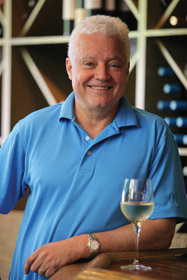

“In Australia, we’re blessed—or not so blessed—with some pretty unforgiving soils,” says Groom, “so grapevines struggle in certain areas. They ‘self maintain.’” In contrast, he found that the North Bay’s idyllic climate and fertile soils, not to mention the rain (which was plentiful at the time) meant vines all flourished. He was shocked by the amount of canopy work that had to be done—and not by machine. “Australia was highly mechanized,” he says, “because we didn’t have a migrant labor force. So I had to go from machine harvesting to everything being done by hand.”
Other practices in California also surprised him. “Australians would rarely drop crop on the ground, but here, it’s common practice to fruit thin, shoot thin and leaf thin to expose the fruit and try to manage the growth of the vines to get quality fruit.” Australian vines had to struggle, but the challenge here was managing the excess fertility and vegetation, or, as he says, “trying to get the vines in balance.”
He explains, “Australia was known for making what we called, ‘fruit forward wines,’ which are very bold. The fruit would jump out of the glass.” That’s what he wanted for Geyser Peak wines. “The goal was to create fruit forward wines that were distinctly varietal and to do whatever we could to maintain a fruit freshness.”
In 1992, Schroeter was on a study tour of the wine industry in Chile and Argentina when Groom encouraged him to come work a harvest in California. This was a common practice among young winemakers, since seasons in the northern and southern hemispheres are reversed, so they can get in two harvests per year. Schroeter hesitated at first, thinking America would be too similar to his native South Australia, but when Groom made him an offer at Geyser Peak, he jumped at the chance. He and his wife didn’t yet have children, and so, he says, “We made a commitment to come here for five years. That was 23 years ago.
“There’s so much that’s great about Sonoma County,” says Schroeter. “That same climate that’s great for making world-class wines is also an incredible climate to live in. When you look at what Sonoma County has to offer, it really is a paradise.”
Like Groom, he became fascinated by the differences between conditions and practices in Sonoma and the Barossa Valley, where he and his forefathers grew grapes and made wine. “In South Australia, the climate, soils and even the quality of the water is just so different,” he says. “So for us, it was a steep learning curve.”
“The soils in the Barossa Valley are less fertile, they have less depth,” he says. “The water has a slight salinity. Whereas here, we found much deeper, more fertile soils and tremendous water quality—maybe not so much in the last few years with the drought—but in South Australia, water has always been a very precious commodity.”
Wines with a different accent
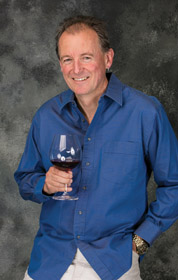

Goldschmidt worked as senior vice president/winemaker at Simi in Healdsburg from 1990 to 2003 before joining Allied Domeq, covering wine ventures in seven countries, for the next five years. In addition to his own wine brand, he also owns Goldschmidt Consulting and Alpine Engineering Solutions.
“The trend here in Napa and Sonoma has been to make wines sweeter and softer, with resulting higher alcohol,” he says, attributing the difference to variance in the ripeness of fruit.
“I make wines in Argentina, Chile, Australia, Canada and New Zealand, for myself and others, but when I’m in Napa or Sonoma, I make wines completely differently to the other places,” he continues. “In the end, I like to make wines that are not only balanced, but also consistent year-to-year—truly representing the vineyard with as minimal input as possible. Down under, that means a little tighter and fresher, especially in New Zealand, while in Australia, it’s less wood and more fruit driven. Each country is different; in the United States, it’s a little rounder and fuller style. I’m influenced by all depending where I am.”
Goldschmidt came with his wife, Yolyn, in 1990 to work as associate winemaker at Simi; they settled in and made Healdsburg their home. He has definite ideas about the role of terroir in the character of wine, and he chooses vineyard sites that are conducive to growing fruit that’s “so exceptional I don’t I need to blend them.”
For his own wines, many elements factor into what makes his choice of sites and his vineyard techniques ideal. “East facing slopes means morning sun and so longer hangtime. Cane pruning means later bud push, smaller clusters and more balanced vines. Glacial soils have more water-holding capacity, and that reduced dehydration leads to balanced acid, sugar and tannin. These sites all have famous neighbors and vineyards that I’ve been working on for more than 12 years.”
Worldwide experience and personal taste
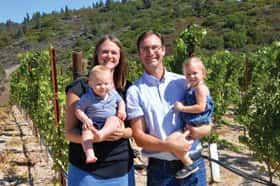

Bilenkij traveled the world working harvests in New Zealand, France and Australia and learned about the balance of wines in different regions and observing different techniques. He brings that experience to collaborate with Steve Ledson. For him, learning and discovering are part of the pleasure of the job. “I enjoy having the experience of working with different grapes and observing different techniques. I like being able to collaborate with Steve and identify some of the driving forces behind nuances in different wines. Our focus on refining the technique has probably been my biggest influence.”
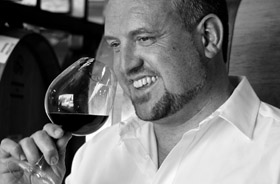

He became winemaker at Twomey Cellars in 2007 and helped expand and develop the Pinot Noir and Sauvignon Blanc programs there until the end of 2013. In 2014, he was named winemaker at Westwood Estate in northern Sonoma Valley; even all these years later, he still sees himself as learning. “One of the things that gripped me in the American culture was the celebration of success—the entrepreneurial spirit,” he says. “There’s a feeling of opportunity within California to reach out and follow your greatest dream.”
Then there’s the economy
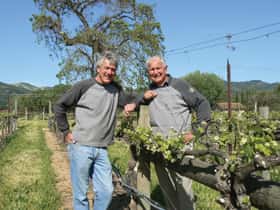

Also unlike Australia, where wines are limited by climate, Loxton says here he can make and sell a wide variety of wines from his location in Glen Ellen due to its many microclimates. “I can go from a cold place to a hot place in 20 minutes. As a winemaker, I can make any style of wine that I want by going to the right place, finding good grapes and, with the population basis, maybe I can sell it.” This would be impossible in Australia and even difficult in France, considering that travel between the very different winegrowing regions of Bordeaux to Burgundy is a six-hour drive. Here, it’s all within reach. “I can say to visitors, ‘Look, there’s my vineyard. Let’s taste my wine’”
When he leads tours, he tells people to observe the soils and the varieties. “On my property, I have four different soil types on 10 acres,” he says. So he takes people around and comes in and pours a glass and says, “Here’s my Rosé, it comes from all the way across the driveway.”
While Loxton didn’t work as a winemaker at home in Australia, he does come from a wine family and remembers seeing that with limited money and limited resources, they had to be innovative. He contrasts that to California, where they seemed to have “unbelievable amounts of money to throw at winemaking.” His approach is more close to the ground. “I show people a working winery. People want to see purple hands, and that’s where I fit in.” He’s returning to his roots as a grower and winemaker, albeit in another country, with different ways.
“I was recently talking to my father, Bob, in South Australia,” says Loxton, “and he’d just come in from mowing the vineyards. He’s 84. He has no employees. It’s all machine harvested, and he goes online from home and can monitor the irrigation process for each block. When I irrigate, I’m walking all around the vineyard opening and closing valves. Back there, they’re forced to innovate because they don’t have money and they don’t have people.”
And if you think farmers here have struggled with drought conditions, Loxton says, “It’s a chronic drought in Australia. For five years, Dad wasn’t allowed to wash the car. So they’ve tried to be innovative about water use and dry farming. In 2014, Dad was one of 80 farmers that got this new cloud-based computer controlled drip irrigation system.” The distribution project received help from the government, which recognized the importance of wine to the economy.
Loxton sources from two biodynamic vineyards. He loves the fruit and the organic practice. “The whole concept of, ‘Don’t fix a problem, avoid the problem,’ that’s what I love. That’s where the organic approach comes in. We don’t have pesticides and we don’t have heavy chemical use. We try to avoid mildew and mold by doing work in the vineyard and using organic compost. I’m a big believer in that part of it.”
Common ground
For Sonoma-Cutrer’s Schroeter, being an Australian winemaker in a California environment adds something special to an already great winemaking culture. “I think having a few Aussies over here making wine adds a different flare to what’s already such a tremendous business,” he says.
“Wine is about culture,” says Goldschmidt, “I’m influenced by what’s going on around me, but I carry the history of the place I come from with me as well. Having worked for large corporations for so long, I’ve met and worked with some of the finest winemakers in the new and old world. When I travel, I don’t stay in hotels but with winemakers. I play with their kids, eat family meals and go to parties with them. It’s through this we learn about wine and people and what makes places and styles unique.”
“When people taste the wine, it’s not just about what’s in the glass, it’s what’s going on in their head,” says Loxton. “When they lift up that glass, they’re remembering the vineyard and seeing the vines—it’s what I do, as well. If I’m tasting wine, I’m remembering walking through the vineyard in Portugal or wherever. That’s the magic of wine. The commodity of course is the drink, but the magic is the connection between what you’re tasting and the experience you’ve had in a place.”
“Australians—and maybe Kiwis, too—are a nomadic people,” says Cane. “We’re so isolated that we want to go out and discover the world. That gives us an adventurous nature.
“We’re quite experimental,” he continues, “and as we travel often and to many varied countries to make wine, we can bring an interesting mixture of old and new world ideas. Couple that with technical invention and development within the Australian wine industry, and we fit quite well into the American desire for handcrafted wines made efficiently and on tighter budgets but with real character and sense of place.”