
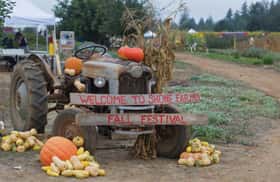
It’s all down on the farm. Shone Farm, that is—a magical slice of paradise that serves as a 365-acre outdoor learning laboratory for 2,000 students enrolled in the Santa Rosa Junior College (SRJC) Agriculture/Natural Resources Department.
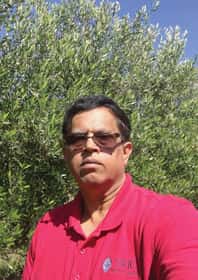
Located between Forestville and Windsor, in the heart of Russian River Valley, Shone Farm provides students with the unique opportunity to “learn by doing,” says Ganesan Srinivasan, dean of SRJC’s agriculture, natural resources and culinary arts programs. It’s a fully operational farm that includes a winery and commercial kitchen, as well as a horse pavilion/special event center. In addition to the Ag/Natural Resources department, students from culinary arts and other SRJC programs also use the farm’s facilities.
There are 120 acres of forest, 100 acres of pasture, 80 acres of vineyards, 12 acres devoted to crop production and four acres of olive and apple trees. At any given time, the farm is home to 25 to 30 beef cattle, 25 to 30 sheep and 16 to 20 horses, Srinivasan says.
Roots in WWII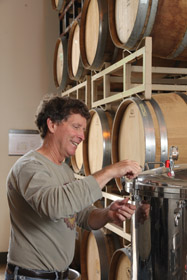

While Shone Farm today is a bucolic setting, it was once “planted” with telephone poles and lots of wires. A part of actor Fred MacMurray’s original land holdings in Sonoma County, the property was condemned by the government during World War II and served as a listening post, monitoring radio traffic around the world.
In 1972, the Department of Defense declared the land surplus, according to Leonard Diggs, Shone Farm’s manager and an adjunct professor at SRJC.
“The Cold War had basically ended and new satellite technology made the listening station obsolete,” explains Diggs. The Department of Education inherited the land and offered it up free of charge to institutions/organizations with the stipulation that it had to be used for educational purposes. In 1972, SRJC applied and initially received 280 acres. YaKaAma (a group of several local Native American tribes)—which once used the land to grow native plants and now utilizes it for tribal events—received 100 acres, and the Sonoma County Probation Camp received eight acres. Thirty years ago, another 85 acres was awarded to the SRJC, bringing its total to 365 acres. The farm was named after Robert Shone, a Sonoma County ag leader who was a SRJC trustee and president of the Sonoma County Farm Bureau in the 1960s.
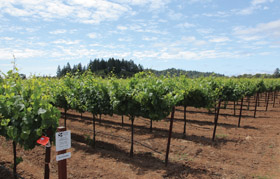

As Sonoma County’s farm landscape changed from apples to winegrapes, Shone Farm’s crop mix changed to reflect the new direction. Currently, 80 acres are devoted to world class Pinot Noir, Chardonnay, Syrah and Sauvignon Blanc. Diggs says another 10 acres will be added in 2017, and additional irrigated pastureland will also be added the benefit the livestock program. The grapes are contracted to local wineries, including La Crema, Sonoma-Cutrer, Clos du Bois, Hanna, Merry Edwards, Coppola, Rodney Strong, Korbel, Kenwood and Kendall-Jackson, among others.
A small, student-managed block of grapes gives students hands-on opportunities to be involved in all aspects of viticulture—pruning, cover crops, canopy management, you name it. And while they are a major source of labor for that block, the farm also contracts with Sanchetti Farming, a local farming company, to manage the commercial grape blocks. “With so many different wineries wanting specific things done in the vineyard in a timely fashion, it makes sense to have an outside company manage it to provide quality grapes for the commercial winemakers,” explains Srinivasan.
While the majority of grapes are sold, the SRJC retains a certain amount from each harvest to use in its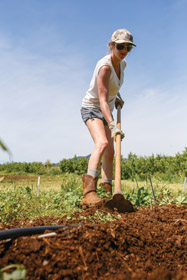
Wills, who’s been with the program for 12 years (after 17 years in the wine industry), wears many hats—typical of a farm operation. In addition to being head winemaker; SRJC bottles about 500 cases each year. He’s currently working on a new craft brewing program, and, according to Srinivasan, “he’s also the chief pizza maker” when the school ignites its new wood-fired pizza oven.
The winery at Shone Farm was the second in the state to be bonded on a community college campus, back in 2008.
“Napa Valley College beat us by one week, and they did all the heavy lifting to get the law passed [to allow for the bond],” says Wills. “Community colleges in California are officially a part of kindergarten through 12th grade education, and they actually had to pass legislation to permit wineries to be on campus. The bonded winery is managed under the auspices of the Shone Farm Foundation, an auxiliary nonprofit organization, independent of the college, whose members represent a broad spectrum of wine industry professionals.”
The Gallo Family donated funds for the winery, and over the years, equipment has been added to outfit it to represent a small commercial winery with state-of-the-art equipment. Wills is extremely proud of the new and improved bottling line. “We used to bottle by hand, but now it’s semi-automatic,” he says.
Each student enrolled in the winemaking program makes about two gallons of wine for themselves as par of their laboratory project, plus they also make the wine that bears the Shone Farm label. Sales from wine, olive oil and other farm products help support SRJC’s agriculture and natural resources program.

Shone Farm has a commercial kitchen which, Wills says, is also used as a demonstration kitchen for culinary classes, as well as a catering kitchen for special events. It’s also the packing station for the farm’s Community Supported Agriculture (CSA) boxes, which are sold in season.
Annie Vercelli holds her Italian cooking classes at the farm, says Wills. The kitchen is named after her father, Joe.
Diggs notes the kitchen was a great foresight on the part of the Dutton Family. “Since the family knew the building was going to be named for Warren [who died in 2001], they were involved with both the fundraising and the design,” says Diggs. “One thing they wanted to make sure of was that the kitchen could handle catering needs for special events.”
Only nonprofits and businesses can hold events at the pavilion.
“State law prohibits using the facilities for private parties,” says Wills. Srinivasan adds, “We make sure we aren’t perceived as competing with local business. Our business is education and training students for the ag industry, and we tailor all our entrepreneurial activities to real-world business experience for our students. It’s all about teaching and learning.”
Out to pasture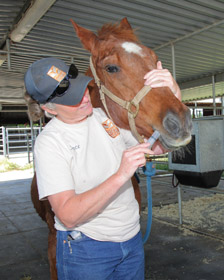

Livestock is an integral part of the fabric of Shone Farm. Cattle are raised to provide grass fed beef cuts to those willing to shell out the extra coins to purchase from a known local source. Gazing over the pasture, one sees large black drainage pipes dotting the landscape. They protect the sprinklers from the animals, “especially the cows,” says Diggs. “There’s lots of things the cows would use the [unprotected] sprinklers for—to scratch, eat, et cetera.”
Horses on the farm are used for riding classes, horse-handling instruction and even to teach about equine massage and acupressure. The Cazadero Boy Scout Troop uses Shone Farm to “winter” the four to six horses it uses at its summer camp. “We do everything for [the horses],” says Diggs. “We take care of their feet, provide a veterinarian and just do everything they need. One of the most amazing things is to watch the dental vets. They use power tools to clean the horses’ teeth.”
Sheep are raised for their wool, which is donated to a nonprofit organization that makes items for homeless women and children.
The livestock keep four students who live on the property (rent free) busy most days.
“We’re out here every night in the spring to see if there are more lambs coming,” says Tony Klisura, a first-year student from Healdsburg who’s one of the lucky four student residents.
“In the fall, we have to check for calves, so we’re always running down into the pasture to see if there are new calves that need to be ear-tagged, checked and weighed.”
Klisura’s family owns a dairy farm and vineyard in Healdsburg, so farm life is nothing new. But he counts himself lucky to be on Shone Farm, even if the work load is heavy.
“The coolest thing about living here and working here is waking up and experiencing this every day,” he says.

One of the most beautiful parts of Shone Farm is also the one least traversed. It’s the 120 acres of forest that Wills says was “planted by God.” To access it, one must go through a gate and meander down trails.
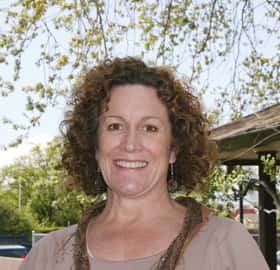
The forest serves as the laboratory classroom for natural resource management students (forestry, parks and recreation, and watershed management). Kasey Wade is the program coordinator and a member of the faculty of SRJC’s natural resource management program.
“I love having the forest to take students into,” says Wade. “I especially enjoy taking students into the forest who are in the ‘intro’ courses. Many of them never imagine lessons in the forest would be a part of their learning. Students can visualize natural resource management practices that are otherwise sterile when delivered in a slide show or during a lecture. For instance, when we talk about fires and students see ‘ladder fuels’ in the forest, they can then visualize, first hand, how fires can quickly move into the canopy if the fuels aren’t managed.”
Wade also notes that many students, in their everyday lives, “don’t get many chances to step into nature to reflect and explore. I personally believe increasing their awareness in natural settings increases their appreciation for natural resources, which leads to responsible action—in their personal lives and in the conservation of natural resources. Awareness leads to appreciation, which leads to action, and for many of the natural resource management students, that action is employment in this field,” says Wade, who had a 19-year career as a park ranger at Lake Sonoma before joining SRJC.
Trails in the forest are maintained by students as part of their curriculum. There’s also a natural spring in the forest, with a cistern that was built before the school took over the property. Unfortunately, water taste tests revealed seasonal inconsistencies, so Shone Farm Bottled Water isn’t an option.
There’s also a mill in the forest. Lumber harvested is cut and used to build “Tiny Houses,” constructed by the school’s “Tiny Houses Club.” The first house is currently being constructed and will be kept at the farm, possibly to be used as student housing.
“Veg out”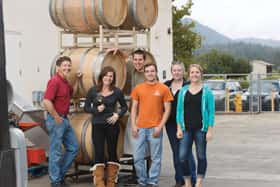

Just outside the forest are the orchards and crop plots. Srinivasan’s favorite crop is sweet corn, and he’s fondly called “Dr. Corn.” In 2013, he introduced Vision, a yellow super-sweet corn variety grown at Fresno State, which has immediately gained a loyal following and is eagerly awaited by Shone Farm customers. Diggs says staggered planting of sweet corn every 10 days during the summer provides a steady harvest of sweet corn from July to October. In addition to apple and other fruit trees, the farm also has two acres of olive trees (900 total). They’re planted unusually close to each other in super-high density planting and maintained as a hedge row to facilitate machine harvesting using a modified grape harvester. Olive harvests can be painstakingly slow, but according to Srinivasan, the Shone Farm olive trees can be completely picked in less than two hours by machine.Last year, 7.1 tons of olives were harvested and pressed into 300 gallons of olive oil, which is sold through Oliver’s Markets, at the SRJC Culinary Café, the SRJC bookstore and at special events. The SRJC also opened a farm stand in May, where community members can now enjoy “Shone Grown” products such as vegetables, fruits, olive oil and grass fed beef, a well as plants from the horticulture department. The farm stand is open Wednesday through Friday from noon to 6 p.m. every week, whether or not the college is in session.
Sustainable is the word
In all its operations, Shone Farm employs sustainable agriculture practices. Some sections of the farm are organic as well.
The electric vehicle used to travel about the farm has a solar panel on its roof. The farm uses recycled water from the town of Windsor. Bio-waste is composted and, in 2015, SRJC’s Shone Farm received a “FuturArc Green Leadership Award” for promoting sustainability in agriculture.
Even the farm itself is basically financially sustainable.
“Currently, revenue from grapes, wine and other Shone Farm products cover about 80 percent of its $1.4 million annual budget. For a teaching farm, this is extremely good—especially comparing other similar facilities in the state,” says Srinivasan. Shone Farm revenue has increased from $500,000 in 2012, to more than $1 million in 2016, in the four years that Srinivasan has been heading the program. “A farm has to be economically viable for it to be sustainable, and we make sure that we practice what we teach,” adds Srinivasan.
This is all good. But you’d be hard-pressed to find someone who disagrees with the fact that the most important thing Shone Farm really sustains is “learning by doing”—in Paradise.
Organic Farming in Marin
Compared to the massive size of Shone Farm, College of Marin’s Organic Farm and Garden, located on its Indian Valley Campus in Novato, is small. Comprised of almost six acres, with only about three acres in cultivation, the educational farm is located next to a soccer and baseball field on a plot of land that once was a barren field with stockpiles of rubble.
“That’s why, occasionally, we’ll find lovely chunks of asphalt all over the place,” says farm coordinator Rebecca Hoehn as she heaves a large piece of asphalt over her shoulder and out of the garden path.
Founded in 2008 as a direct response to a call from the Marin Agricultural Summit to establish an organic teaching farm on the Highway 101 corridor, the Indian Valley Organic Farm and Garden was created to support and sustain local food systems and organic agriculture, to help develop the local agricultural workforce and offer job training for an underserved North Bay population, and to provide healthy, nutrient-dense food for hard-working local residents. “It’s close to Highway 101, you can get here by taking public transit and it’s on a community college campus,” Hoehn says.
Four groups are partnered with the farm. College of Marin provides the land, curriculum and educational classes/faculty. Conservation Corps North Bay handles day-to-day operations and finances; the farm sells produce and flowers at farmers markets, through CSA (Community Supported Agriculture) subscriptions and operates its own farm stand onsite every Saturday from 10 a.m. to 2 p.m., rain or shine. The University of California Cooperative Extension (UCCE) and the Marin Master Gardeners offer essential access to the North Bay’s farming community and conducts public workshops. And the Cultural Conservancy, a national nonprofit based in San Francisco, “works to restore native, earth-based cultural traditions and ways of knowing to help preserve and enhance traditional ecological knowledge,” says Hoehn.
College of Marin students meet for class three times per week at the farm. In addition to Hoehn, who’s employed by the Conservation Corps North Bay, there are four farm corps members “working part-time and learning a plethora of organic farming techniques,” says Hoehn, plus two interns from Terra Linda High School who work six hours per week.
The farm is a busy place. Open to the public Tuesday through Saturday (9:30 a.m. to 4 p.m.), it hosts field trips for children from kindergarten through high school, who will visit upward of three to six hours at a time. While there, they transplant plants, build compost piles and learn harvest techniques. “Even with the little kids, we teach. They learn how a seed grows,” says Hoehn.
Now in its ninth growing season, the farm has more than 150 different varieties of fruits, vegetables, flowers, herbs and native plants. The orchard features peaches, nectarines, plums, pluots and apples. McEvoy Ranch donated more than 50 olive trees—the traditional Tuscan blend of five different varieties—and last year the farm harvested 850 pounds of olives, which it pressed into 12 gallons of olive oil. “We sold out within one week,” Hoehn says.
The farm backs up to Marin open space, which means wildlife can be problematic, Hoehn explains. A fence deters deer, but jackrabbits, raccoons, ground squirrels and gophers pretty much have the run of the place. “During the drought, the animals found this to be a very welcoming place,” Hoehn laughs.
Two of the more interesting residents are a red tail hawk and an egret, which help keep the rodent population at bay. The egret is particularly entertaining, according to Hoehn. “It’s here from spring through summer,” she says. “And you should watch it eat a gopher. It wiggles all the way down its neck.”
There’s also an owl box, but so far no owl has taken up residence. Apparently, owls are unaware of the high rental costs in Marin.
Indian Valley Organic Farm and Garden
1800 Ignacio Boulevard
Novato, CA
www.indianvalleyorganicfarm.org
Winemaking in Napa
“Some great winemakers learned their craft in a boxcar behind the agricultural program building,” says Paul Gospodarczyk, winemaker and lead educator for Napa Valley College’s Viticulture and Winery Technology (VWT) program.
But in 2002, that changed. The old boxcar was replaced with a state-of-the-art mini educational winemaking facility, which, in 2008, became the very first winery located on a community college campus in California that was bonded and licensed to produce and sell wine. “Before we got the bond, the wine we made here had ‘experimental’ status, and everything had to be destroyed,” says Greg Siewert, assistant winemaker, operations manager and adjunct instructor. “Everything was restricted, even the wine tasting, which could only be done for educational purposes.”
Today, the Napa Valley College Estate Winery, located at the corner of Napa Vallejo Highway (121) and Streblow Road in southern Napa, is a top-notch educational facility for the next generation of winemakers, wine marketers and vineyard managers. Students craft 500 cases of Cabernet Sauvignon, Pinot Noir, Chardonnay, Sauvignon Blanc and Syrah from 5.2 acres of grapes grown right outside the winery door.
“It’s small,” says Gospodarczyk, “but the thing you have to understand is, it’s not a home winemaking program. Everything relates to how a commercial winery operates, just on a smaller scale. The way we make wine at home is totally different than the way we make wine in a winery.”
On any given day, the Napa Valley College Estate Winery is teeming with activity. Some 440 students, from traditional college age through retirees, were enrolled in the program last year, says Gospodarczyk. Watching a winery operations class is like observing an anthill, with students playing the role of worker ants, hosing out tanks and barrels, filtering and racking wines. Students come from all over California and the United States, drawn to the epicenter of America’s wine industry. “We even have students from Turkey, China and Korea this year,” Gospodarczyk says.
Local winemakers lend their knowledge and support, which makes the program even stronger. “I view that as a very critical component of the program,” Gospodarczyk says. “They bridge the gap between academia and expertise. It’s great to have the facilities to teach and train, and also to have input from the community.” Among the regulars who visit are Michael Weis (Groth Vineyards and Winery), Marbue Marke (Caldwell Vineyard and consulting winemaker for several other brands) and Richard Peterson (Gallo and others), who’s written a book (The Winemaker) recounting his experiences as a wine pioneer. Famous grads of the program include Dr. Nicki Pruss (formerly of Stag’s Leap), Tom Meadowcroft (Meadowcroft Wines) and hundreds others.
“Lots of our students have day jobs [in the wine industry]. In the beginning, I made the mistake of telling a class that if anyone had already worked 14 hours that day, they could skip clean up. And everyone left.” Gospodarczyk laughs.
Winemaking encompasses a year of activities—from pruning to bud break, leafing to harvest—so classes are held year round. Harvest can be particularly tricky. It usually comes at the beginning of the fall semester after all the experienced summer students have moved on.
“And it’s like, harvest is here and I have all new employees!” exclaims Gospodarczyk.
Future plans call for construction of a tasting room to showcase the winery’s products, which have won gold and double gold medals at some of the nation’s top winery competitions. And Gospodarczyk also says the college is developing a brewing program.
“It’s a great learning environment,” Gospodarczyk notes. “I frequently joke that we’re not really teaching, because the students love it so much they show up prepared, they do their readings and they do their homework. It’s just incredible.”
Napa Valley College Estate Winery
2277 Napa Vallejo Highway
Napa, CA www.napavalley.edu