

It’s no puzzler how California reached fifth place on ABC News’ 2015 list of most expensive states for residents. With vast natural resources, gold deposits that influenced the greatest western migration in the country’s history and a multitude of industry captains who forged the eighth largest economy in the world, the Golden State truly lives up to its name. But it’s so easy to lose sight of the natural beauty that surrounds us when there are televisions to watch or Warriors games to attend. The North Bay’s night life is, but the antiquated charm of its wilderness is breathtaking under moonlight—and it’s waiting to be rediscovered.
Bioluminescence in the Bay
Historically, traveling the seas after dark required a supreme understanding of astronomical bodies to prevent explorers from sailing in circles.
But unlike the unrelenting oceans of the storied past, Marin County’s Tomales Bay holds less sinister secrets when it sees the soft glow of the moon and stars.
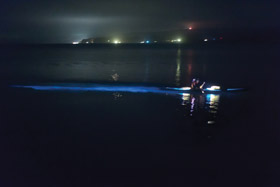
When the water (marginally) warms up during the summer, kayaking tours take clients to the bay at night to experience bioluminescence (the biological process of glowing). Algae in the bay absorb sunlight for energy, and when agitated at night, will visibly glow a bright turquoise blue. Dallas Smith, operations manager for Blue Waters Kayaking in Inverness and Marshall, has spent the last five years showing the midnight phenomenon to the adventurous.
“It’s definitely one of the most popular reasons people like to book with us,” he says.
As early as February and into October, Blue Waters Kayaking takes groups of up to 12 into the bay to enjoy the sea life. The bioluminescence tour starts before twilight and helps acclimate new kayakers to their equipment before darkness falls.
“Overall, it takes around four hours to complete the tour,” says Smith. “Along the way, you can see harbor seals, all kinds of fish and dozens of bird species.” A group of 12 will have two guides from Clear Blue, able to direct kayakers throughout the tour.
When the time is right, the guides gather the kayakers and show them the wonders of the bay. Agitation in the water caused by the kayak paddles causes the algae to glow, surrounding the kayakers in turquoise light. “If there’s fog on the bay, the glow refracts and surrounds the whole group in light. It’s one of the most beautiful things you’ll ever see,” says Smith. Visibility for the glow is best on foggy nights and under new moons, when the moonlight is dimmest. Reservations fill up very fast, especially during those conditions.
Blue Waters Kayaking also takes private parties of a minimum of six people to see the bioluminescence midweek. Everyone will be in a tandem kayak, with a 13-year-old minimum age for public tours. Kayaks are affixed with soft glow lanterns so they can be seen at night.
“Unfortunately, the fact that it’s so dark out when we take people on tours makes photos particularly difficult,” warns Smith. “Besides, there’s no substitute for going out and seeing it in person. It’s a one-of-a-kind experience.”
The Robert Ferguson Observatory
 Finding a place in the North Bay where the night sky isn’t polluted by light can be tricky. Star gazing, an integral skill for navigation and a wonderful hobby for celestial enthusiasts, is getting lost in the modern world with its constant barrage of city lights. But there exists a place in Sonoma County not only dedicated completely to the science of the stars, but to teaching it to anyone willing to listen.
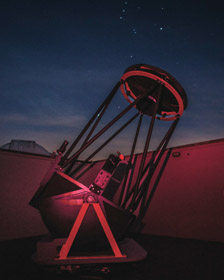
Placed in the heart of Sugarloaf Ridge State Park, the Robert Ferguson Observatory is the largest observatory on the West Coast dedicated to public use. The docents (I like to call them “sky-entists”) at the observatory belong to the Valley of the Moon Observatory Association, a nonprofit organization dedicated to keeping the facility running. President Steve Smith says the observatory recently unveiled a brand new 40-inch observing telescope, made by the docents, by hand, over the past ten-plus years. “It’s amazing what we can see with this new telescope,” he says. “We haven’t yet found the limitations of it, but everything we’ve viewed on it compared to smaller scopes shows greatly increased brightness and detail.”
The new telescope is one of two visible light telescopes available for public viewing. During the observatory’s star and solar parties, which take place once or twice per month, docents use those scopes and often bring their own personal scopes for the public’s enjoyment. Docents align the telescopes with astronomical bodies in the solar system and the galaxies beyond it: popular requests include Jupiter, Saturn, Neptune, the Sun, the Moon and various nebulas and supernova remnants. A third telescope has an astronomical research camera attached. “The photos are in black and white,” says Smith. “The camera takes images in monochrome, but we can add color filters to the lens and combine many filtered photographs to make them color. The process takes many hours and is very labor intense.”
The observatory sells its color photographs, and also includes a lithograph series, where color photos of astronomical objects are printed on sheets of aluminum.
But leisure isn’t the only purpose for the observatory. It’s a place of learning as well. “We train docents in the management of operational equipment and help them further develop their passions. We also hold public classes about general astronomy and how to locate and identify various astronomical objects,” says Smith.
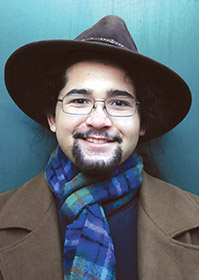 Docent Carlos Anicetti concurrently studies astrophysics at Princeton University. “I first came here in my freshman year of high school. About eight students signed up, but I was the only one to actually show up. I looked at the observatory and the people running it, and I knew, beyond a doubt, that I wanted to be an astronomer. To realize my passion and actively observe the stars is a dream come true.”
Anicetti, Smith and other docents from the Valley of the Moon Observatory Association are also available for private parties and screenings. Parties of up to 50 make reservations in advance, and for a fee, receive a private showing of the stars. “We’re also introducing a new hybrid program called ‘Focus Nights’,” says Smith. “We’re offering to curate visitors who purchase tickets through the observatory’s website, rfo.org. It’s not as big as the public viewings and star parties, so we can answer more questions and take more requests per person, and they don’t have to rent the whole observatory as they would with a Private Event. It’s a real win-win, and we can help cover our costs with the admission.”
But besides paying for operating expenses, Smith reminds, people should come to the observatory to learn a practice that’s been crucial to mankind for eons. “If it’s your first time here, you’ll get to see, close up, the most fantastic things that make up our night sky. It’s a wonderful experience.”
Napa City Nights
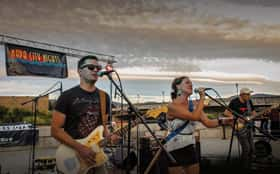 Each year, hundreds of local bands apply for a spot for Napa City Nights, a nonprofit event held on the corner of Third and Main Street in partnership with the city’s parks and recreations department. This year, Napa City Nights begins its fifth season on June 6 (it runs every Friday night through September 4, at 6:30 p.m.).
“We try to theme the days, so one night we might have rock and roll, and another night we might have a line up of blues or jazz ensembles,” says project manager Chris Chesbrough, who plays guitar in his own band, c4INC. “We don’t usually take the stage. There’s so much competition for a spot we get to vet the applicants for quality. We’ve had one experience trying to do a favor for a friend of a friend. But, afer tey showed up and broke out the karaoke machine, we realized we should try and review the bands before we sign them,” he says.
The showings are free, and the nonprofit behind Napa City Nights doesn’t charge any services. Patrons are encouraged to stroll around downtown and stake a spot before the festivities start. “We’ve seated close to 1,000 people on certain nights. It’s packed, but there’s always space on the dance floor for more,” says Chesbrough.
Sometimes, hot dog vendors or pretzel stands open up on the sidewalk, but Chesbrough encourages patrons to explore the downtown’s many restaurants for a bite to eat. “It’s a picnic environment, so feel free to bring a blanket and a basket of food. But we love promoting the downtown scene with Napa City Nights, so you won’t see any food trucks or stands,” says Chesbrough.
“We’d love to have some more established and up-and-coming bands sign on, but when their sign-on price is equal to our entire budget for the year, we have to be a little more selective,” adds Chesbrough. “But we’ve had some pretty fantastic bands come through. Personally, I love watching Purple Haze come to the stage. It’s a Jimi Hendrix cover band that’s so good, the lead singer and guitarist played Jimi on an HBO recreation series. He’s fantastic.”
Napa City Nights is designed as a family event, so rap battles and other inflammatory musical genres aren’t represented. Chesbrough finishes, “What I want a first-time goer to walk away with is the vibrancy and energy of Napa. They should experience world-class food, followed by a musical experience that gets them on their feet and dancing under the stars.”
Under a sea of stars
You no longer need to be an explorer in the Old West to feel the joy of a starlit night in the middle of unspoiled wilderness. The North Bay has successfully preserved the spirit of adventure and wonder across its inlets, forests and mountains. Today, it only takes a phone call or online reservation to experience that joy first-hand. Whether it’s catching the glow of Tomales Bay, identifying the horsehead nebula beyond our solar system or rocking out under the Napa city streetlights, there’s no shortage of activity outside nightclubs and living rooms in the North Bay.
An Educational Powerhouse
To connect the Robert Ferguson Observatory with more visitors interested in local astronomy, the California Academy of Sciences entered into a partnership with the observatory to host star dates. On select days, docents from the observatory enter the academy and host educational lectures about the solar system and the celestial bodies beyond it.
“Because the camera telescope can be controlled electronically via a link, we can stream live images of astronomical objects from the observatory to the academy and make adjustments on the spot,” says observatory President Steve Smith. “Overall, we hope to reach out to people who don’t know we exist and provide them an experience they can’t get in San Francisco, where the light pollution is too severe to see the stars.”
Won’t Quit for the Quake
In the aftermath of the 2014 Napa earthquake, people wondered if Napa City Nights would continue as planned or if cleanup efforts would force them to scrub the event. “We weren’t sure if people were up for it in the beginning,” says project manager Chris Chesbrough, “but we decided we didn’t see a reason for cancelling the big night—and it turned out to be the biggest one of the year.”
Fans packed the outside amphitheater to rock out. Despite the rubble, people found seats and took to the floor, dancing well into the night. “It was kind of our way of saying the quake didn’t break our spirit,” says Chesbrough. “We have heart, and we’re not gonna let a little shaking get in the way of some shaking of our own.”