
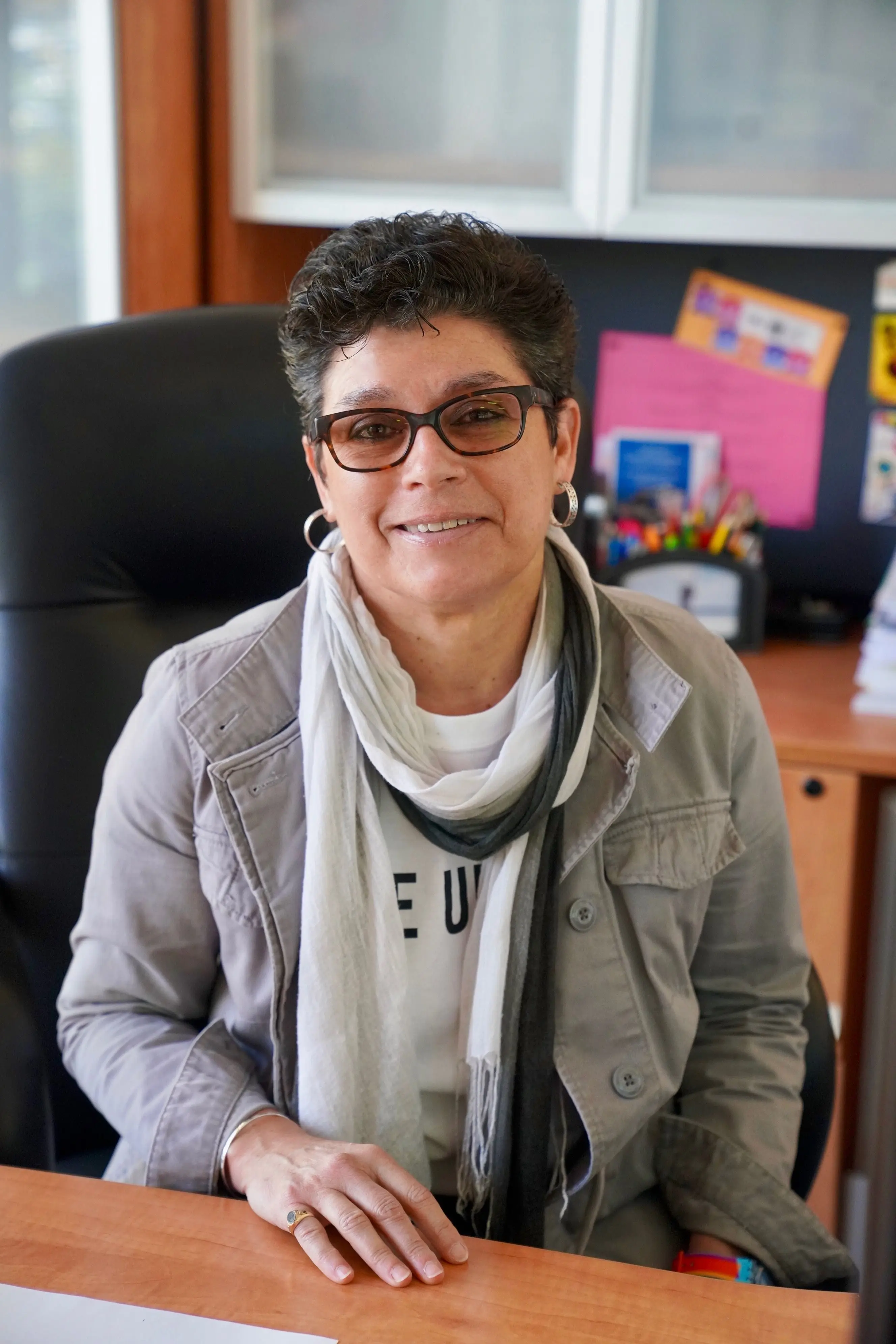
The many chairs lined up before Thanksgiving at a Sonoma County food distribution site portended more than the holiday’s typical dinner-table need to United Way of the Wine Country President and CEO Lisa Carreño.
The plethora of seats signaled a slippery slope into poverty that many North Bay residents may be about to embark upon since the July passage of the One Big Beautiful Bill Act, according to North Bay insiders on the front lines of food assistance, housing support and health care.
When asked if she predicts significant numbers of people will be launched into poverty as H.R. 1 fully takes effect, Carreño is emphatic.
“It absolutely will,” Carreño says. “Our concern is a ripple effect across this country from self-inflicted wounds that will push our world into a global depression.”
She says she sees “very little resolve” among U.S. leadership to address policy inequities that further widen the gap between the wealthy and the poor, rendering “less than 1% [of the population] enriched—and we’re subsidizing their wealth.”

The congressional legal behemoth dubbed the One Big Beautiful Bill Act marks the largest downscaling of health-and-human-services funds in U.S. history, amounting to $1 trillion, while featuring $4.5 trillion in tax breaks, reported the Legal Defense Fund, a U.S. law advocacy organization. The bill is punctuated by cuts for 42 million participants on SNAP (Supplemental Nutrition Assistance Program). It also makes immediate reforms for over 71 million enrollees on Medicaid, as well as the U.S. health care exchanges created under the Affordable Care Act.
According to nonprofit leaders specializing in food assistance, housing support and health care services across the North Bay, this is just the tip of the iceberg.
Tens of thousands of Sonoma County residents will lose or face barriers to essential benefits like Medi-Cal [California’s version of Medicaid], CalFresh, housing assistance and tax credits. And work requirements and immigrant exclusions “will push families deeper into poverty,” Carreño says.
Those exclusions also threaten the livelihood of farmworkers, especially the half of the 83,000 immigrants in Sonoma County who are undocumented.
Work requirements, meanwhile, will take parents administering childcare out of the home, forcing them to pay out of pocket or do without childcare altogether. Of the over 135,000 Sonoma County residents on Medi-Cal, more than 30,000 individuals will be required to work to receive benefits by the end of 2026.
Times were already tough. According to the May release of the United Ways of California’s annual Real Cost Measure gauging the population’s ability to cover the cost of living, 1 in 3 Sonoma County families (45,000 households) was found to be struggling to meet basic needs.
The data shows the trend worsening.
During the Oct. 14, 2025 Sonoma County Board of Supervisors meeting, a presentation highlighting the public impacts of H.R. 1 showed funding impacts worsening in fiscal year 2026-27.
Demand for assistance through the United Way’s 211 Sonoma resource hub has nearly doubled to 9,421 new site visitors checking out programs and services from July to November.
“The nonprofit- and community-safety net is already stretched thin and will face surging demand for food, housing, mental health and legal services as federal benefits are withdrawn,” Carreño says.
Current data reveals a tripling of requests for housing and food assistance. Carreño says “it’s reasonable to expect” at least a doubling of need over the next 12 months.
The nonprofits providing these basic needs are hungry for solutions.

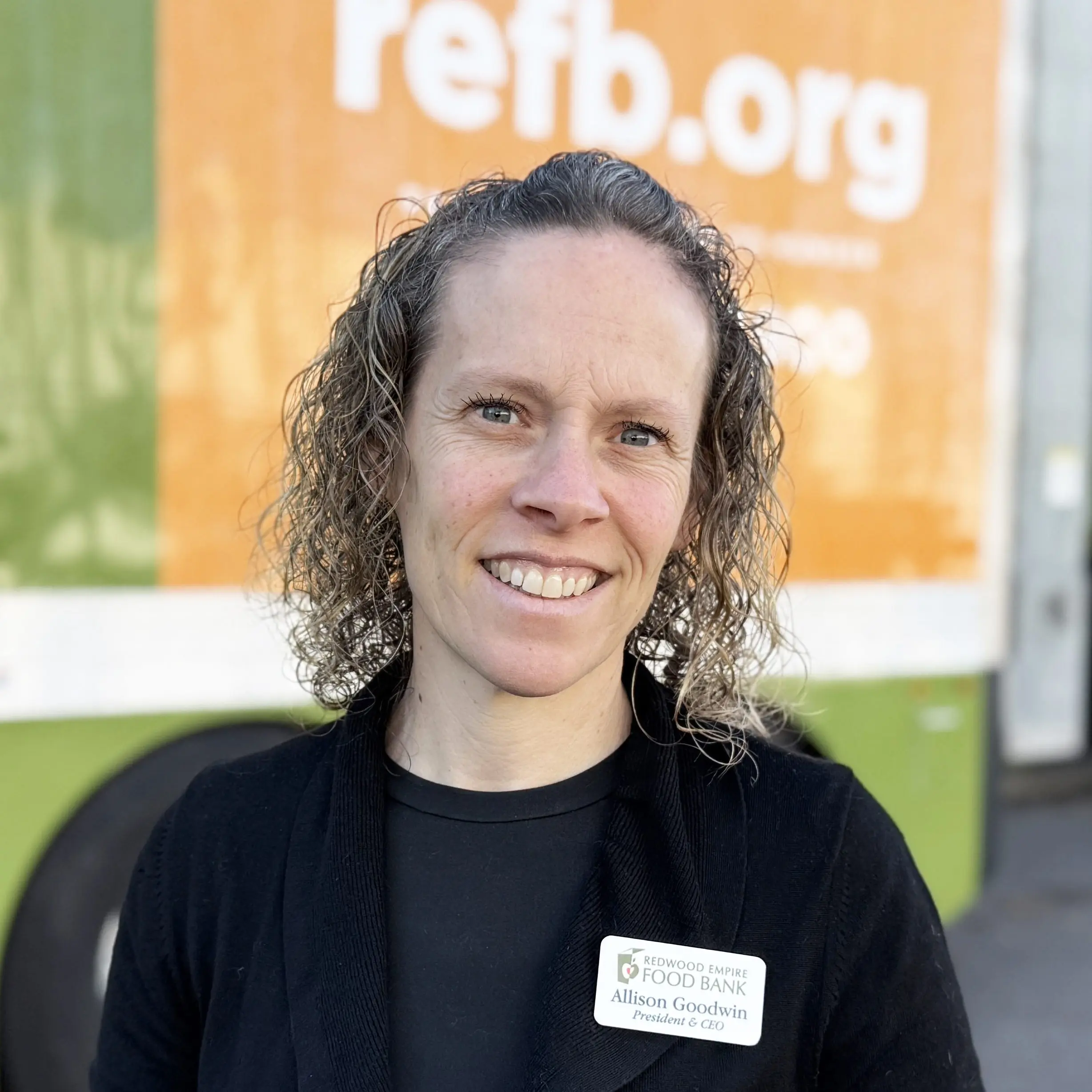
At the top of the list is Redwood Empire Food Bank, run by CEO Allison Goodwin.
“We’ve seen a direct impact with SNAP reductions. It’s hard to know what will happen with H.R. 1, but we are seeing more volume in numbers of new families signing up,” she says.
Goodwin cites a 300% increase to REFB, the North Bay’s primary food assistance program, with servicing for 500 new families per month for “the first time.” Adding to the challenges of increased need led by higher grocery prices, inflation and tariffs are the cuts faced earlier this year in which nine truckloads of food were held back from U.S. Department of Agriculture programs.
She equates the ebb and flow of answering the call to those in need as “a whack-a-mole” scenario. For instance, simple seasonal changes exacerbate financial strains, as households endure the budget crunch of elevated heating bills.
“Are we concerned? That’s an understatement,” says Jared Call, director of advocacy and public policy for the California Association of Food Banks.
To illustrate the widespread need, California food banks served 4.5 million people a month during the pandemic. Now, it’s over 6 million.
“The need is felt across the state,” Call says, leading to “tremendous fear and stress.”
Health care may bear the brunt of that anxiety as a double-whammy—as cuts to medical programs will lead to the lower income people in poor health not seeking the care they need until their conditions worsen enough to send them to the emergency room.
“As the funding dries up, less people come in for screenings. More episodic care means people wait because they’re afraid of the (medical) bill,” says Santa Rosa Community Health CEO Gaby Bernal Leroi. “Then they go to the hospital and ERs get overwhelmed. That’s the trickling impact that effects all people, and health care [costs] go up for everyone.”
Stresses Bernal Leroi: “It’s much more challenging to get people in [for preventive care] if they don’t have insurance.” And all those people being dropped from Medicaid, “they’ll go back to being uninsured,” she says.
Of the community health center’s more than 42,000 low-income clients seen in eight clinics across the greater Santa Rosa region, 74% were covered by Medi-Cal and 11% by Medicaid, it reported in a patient snapshot. That same percentage qualifies as self-pay or uninsured. About a third of these low-income patients consists of children.
Beyond the challenges for patients, the workforces of these community health organizations are also expected to experience the burden of burnout and stress among health care workers as more patients show up with more pressing issues. Clinicians will be forced to consider remedies and treatments that patients no longer covered by Medicaid or Medi-Cal can afford.
This is what Bernal Leroi refers to as the “moral injury” of health care resulting from these cuts.
“We’re already hearing anecdotal evidence of people’s concerns about coming in,” she says.
That’s why the local health care entity has remained proactive in fending off the effects as much as possible. The staff is waging a public outreach campaign to discuss the matter with patients at the time of scheduling and at arrivals in the Sonoma County clinics.
Napa County’s health care arena is bracing for its own impact.
“These changes [under the legislation] will directly impact our hospitals and the communities we serve,” says Luke McMurray, spokesman for Adventist Health of Roseville, with facilities in St. Helena and Napa.
McMurray indicates the hospital staff is currently combing through the text of the bill to draw conclusions on its implications.
“While the full extent of the impact of this bill on our hospitals is unclear, we do know that hospitals could lose significant Medicaid revenues over the next decade,” he says. “Hospitals will also see an increase in uncompensated care losses, resulting from coverage losses and the cuts states will inevitably be forced to make due to federal funding reductions.”
The county’s clinics and resource centers are also preparing for the worst.


“There’s already a need for our services because of the higher cost of living,” UpValley Family Centers Executive Director Jenny Ocón says.
The struggling wine industry is also adding to the challenges of farmworkers in the resource center’s coverage area, says Ocón.
“Farmworkers didn’t have as much work [in 2025],” she says.
Moreover, immigration crackdowns have stoked fear among members of the undocumented community who may refrain from seeking professional medical help. Ocón refers to the resulting trend as a shadow society.
“If wages have kept pace, that’s one thing—but they haven’t,” she says. “These things are going to have a major effect. As we’re going into the next year with cuts to Medicaid, it’s not looking like a pretty picture,” Ocón says.
Ocón indicates the one silver lining lies with how much organizations and groups care and are willing to put up a proactive fight.
This includes the Catholic Church. Shortly after the H.R. 1’s July 4 passage, Archbishop Timothy P. Broglio of the U.S. Archdiocese for the Military Services predicted the legislation “will cause the greatest harm to those who are especially vulnerable in our society.”
Broglio labeled the cuts as “unconscionable” for health care and food assistance and tax breaks to the wealthy as methods to “increase inequality.”

Broglio’s line of thinking was joined by the Society of St. Vincent de Paul, which offers $1.7 billion in aid to more than 5 million every year seeking food pantries, among other services.
John Berry, the national president, claimed the cuts inserted in the 244-page bill will have “a staggering impact on the poor,” the Catholic Review reported.
Like most lengthy pieces of legislation, the average American won’t read the bill and, therefore, will be caught off guard by its consequences, Georgetown Center for Poverty and Inequality Executive Director Lelaine Bigelow said in the Catholic Review.
According to the U.S. Census Bureau, 35.9 million Americans lived in poverty in 2024, representing over 10% of the population.
Founded in 1994 with a goal of achieving a healthier community through clinical services and community programs that empower people, the Center for Well Being of Santa Rosa cites data from First 5 in Sonoma County’s Early Childhood Landscape report, which ranks 1 in 3 children (about 37,000) living in poverty. The 2025 federal poverty level for a four-person family is $32,150 per year.
“In a county where nearly one in three residents relies on Medi-Cal, even a small rise in the uninsured will mean more preventable emergency room visits and crushing medical debt,” says Karissa Moreno, executive director of the Center for Well Being.

She continues: “When families are forced to choose between paying medical bills and paying for food, rent or utilities—especially for Sonoma County renters who are already deeply rent-burdened—they are pushed closer to homelessness and hardship.
In Sonoma County, just over half of occupants in tenant households are considered “rent burdened,” defined as paying 30% or more of their monthly income on rent.
Moreno suggests the One Big Beautiful Bill “will push more of our neighbors” into poverty, hunger and medical crisis. She predicts 30% of Medi-Cal recipients will lose their medical coverage.
“This is something that’s going to have a ripple effect on every member of society. Most people think it will only affect the low-income and undocumented, but it will affect all when people can’t have access to primary care,” Moreno says.