



For some, the “great flattening” might be the hoped-for result of a post-holiday gym membership. But for businesses, it indicates a major transition in the workplace.
The Great Flattening refers to the growing trend at companies to downsize middle management positions—reducing the number of supervisors within the workforce hierarchy. The term comes from the idea that workplace hierarchies take on a pyramid shape, with a few execs at the top, supervisors in the middle and the many workers at the bottom; by removing the middle, the shape flattens. Some describe it as an “unbossing”—the relatively untested concept that lower-level employees can simply manage themselves.
The origin of the trend is generally tracked to the many tech-firm layoffs in 2024, before spreading to other industries such as retail, finance and government. When the pandemic inspired many people to abandon their jobs during the so-called Great Resignation, the ensuing years led to an over-hiring phase.
While there is a cost saving that comes with fewer positions, the primary motivation for “flattening” is efficiency, say labor watchdogs. With fewer communication gatekeepers, companies believe decisions can be made quicker, leading to improved response time to customers and clients. And why is this suddenly possible? Why, AI of course! Artificial intelligence and advances in project-management software have rendered the role of many layers of management redundant. In 2024, layoffs of middle managers were up about 9%, according to Live Data Technologies, a job-tracking firm. “You can’t go faster and be more connected to a larger ecosystem if you’re having to go up and down a hierarchy for every decision,” Deborah Ancona, an MIT management professor, told Business Insider last year.
That said, working stiffs shouldn’t get excited to kiss goodbye to their foreman just yet, say employment experts. Many such moves don’t eliminate employee oversight, they just shift that oversight to other managers who soak up an increasing number of direct reports. HR firm Gartner found that between 2017 and 2023, the average number of employees per manager jumped from five to 15.
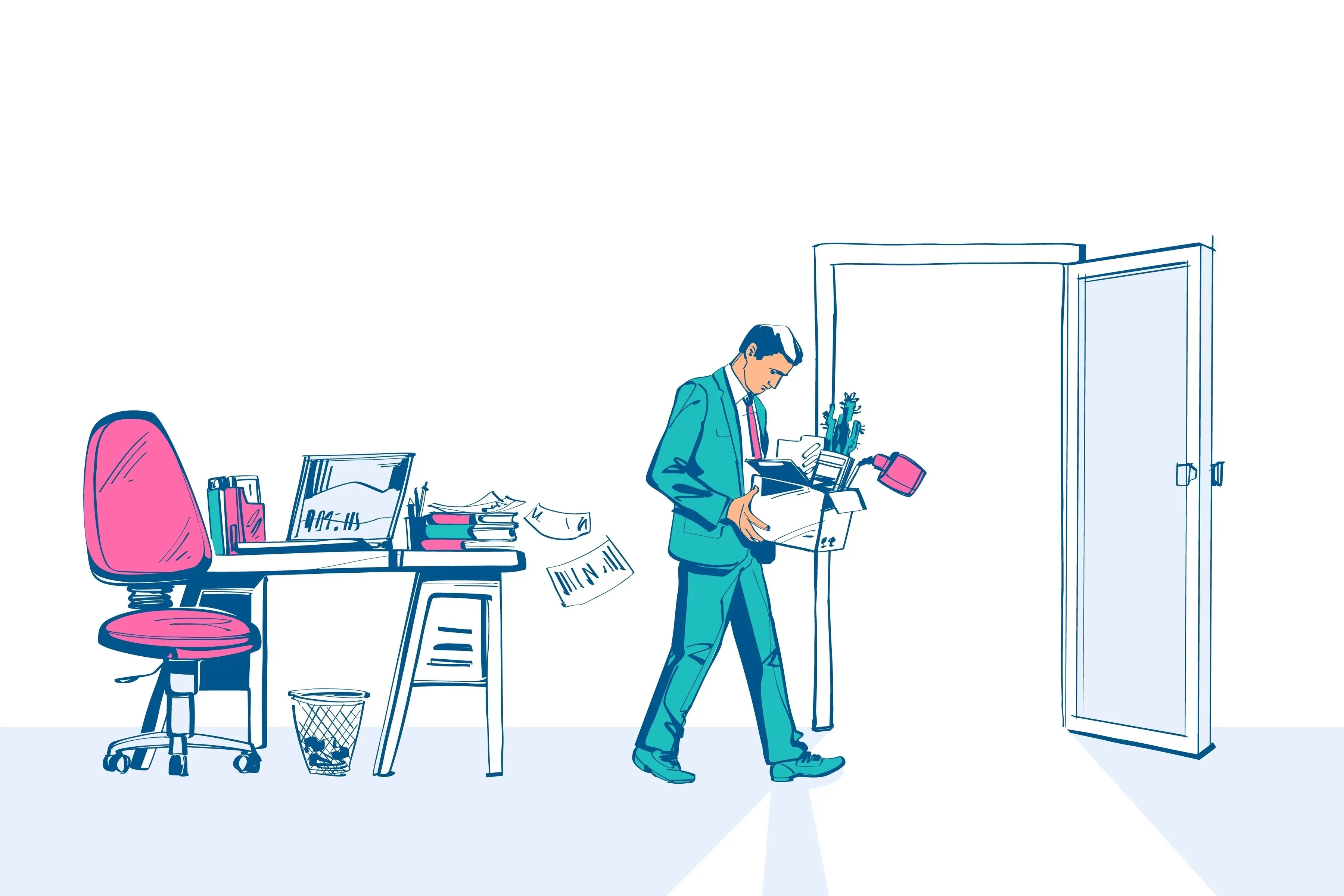 But some companies are learning there’s a good reason a conduit between executives and frontline staff is necessary. Brad Smith, a science officer at workforce-solutions company MeQ, says a quality manager can be good for morale. “The greatest suffering will be among individual contributors on teams where middle managers have ben made obsolete,” Smith told hrmorning.com, noting that a quality supervisor can mitigate burnout, turnover and departmental squabbles, among other things. “The most consistent predictor of a positive [workplace culture] is having a manager who is intentional about looking after team mental well-being.”
Another HR exec, Beth Steinberg, told the Wall Street Journal that all this unbossing is simply leaving those few managers who remain without a means to adequately guide and support their teams.
“They cannot spend time with their employees, they cannot help develop their employees,” Steinberg said. “Really the only thing they can do is push the work forward.”
Should your company flatten?
Here are 7 things a company should consider before foregoing with middle managers, according to hrmorning.com:
• Can other managers absorb some of the management duties?
• Are the employees impacted by the layoffs prepared to navigate work with less guidance?
• How will the layoffs affect morale, productivity and turnover?
• Will employees be able to coordinate and cooperate to meet goals?
• How much realignment will we need to do to ensure we meet goals—and are we able to scale up in time?
• What technology changes will we require, and can we train employees to handle those changes?
• What are we willing to give up to make a flattening work?