

Fishing-related businesses across the North Bay are navigating changes in salmon fishing seasons as the California Department of Fish and Wildlife [1.1](CDFW) is engaging in a massive effort to increase the number of salmon in California’s rivers and off its coast. Through this period, businesses from charter fishing boats to bait and tackle shops are indicating they could use more federal emergency funds. This will help them stay in business through limited seasons and remain ready to serve customers purchasing everything from chartered trips to lures.
In 2025, CDFW allowed just two brief recreational salmon fishing seasons, in June and September, totaling four legal salmon-fishing days. Commercial ocean salmon fishing hasn’t been allowed since 2023.
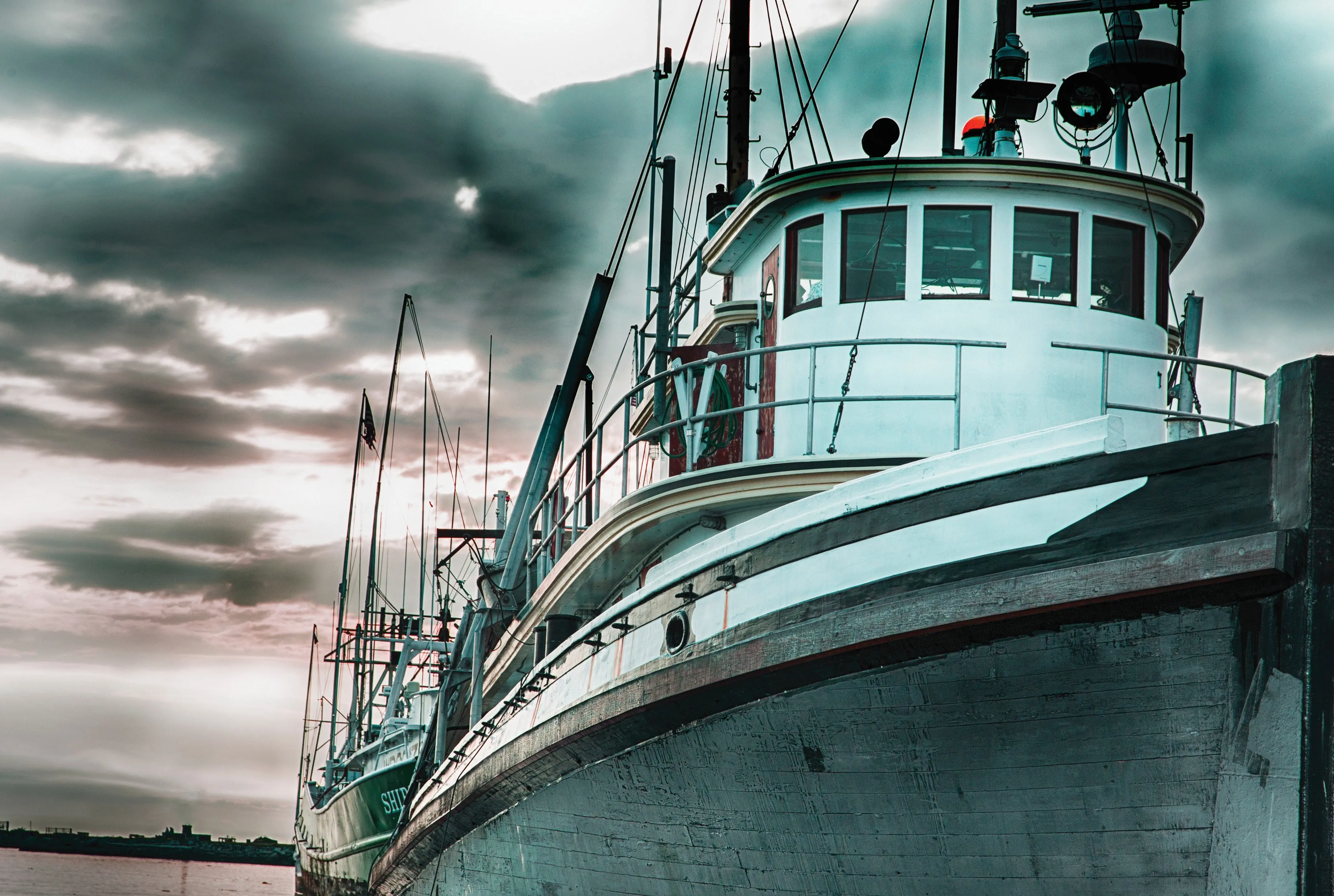
“Charter boat captains, fishing gear, and bait and tackle shops aren’t the only ones who are hit when commercial and recreational fisheries [salmon fishing seasons] are barely even there or closed. It’s also boat dealers, gas stations, supermarkets and convenience stores that sell ice, hotels, restaurants and all the other businesses that meet the needs of people who come to coastal areas in Marin and Sonoma counties to fish,” says Captain Phil Havlicek, owner of Reel Time Charters, LLC in Sausalito.
Open fisheries have a positive ripple effect out from coastal fishing hotspots, like Stinson Beach and Duxbury Reef, as far east as Sacramento. This is because there are a number of bait and gear wholesalers based in the Delta. Avid fishers driving in from counties to the east also pick up items from their favorite stores on their way out to the coast. Open fisheries even boost activity and profits for software apps related to boating reservations. More users log in to the apps when salmon fishing is allowed.
“There are other types of fishing in northern California, including lingcod, rockfish and halibut. But salmon drives all North Bay fishing. Small businesses need opportunities to serve customers to thrive,” says James Stone, founder of Elite Sportsmen fish guide service in Sutter, north of Sacramento.
A return to fishing
In 2025, California had its first summer and fall recreational ocean salmon fisheries in two years. Commercial ocean salmon fishing has been closed since 2023. Both the recreational salmon fisheries led to some overfishing.
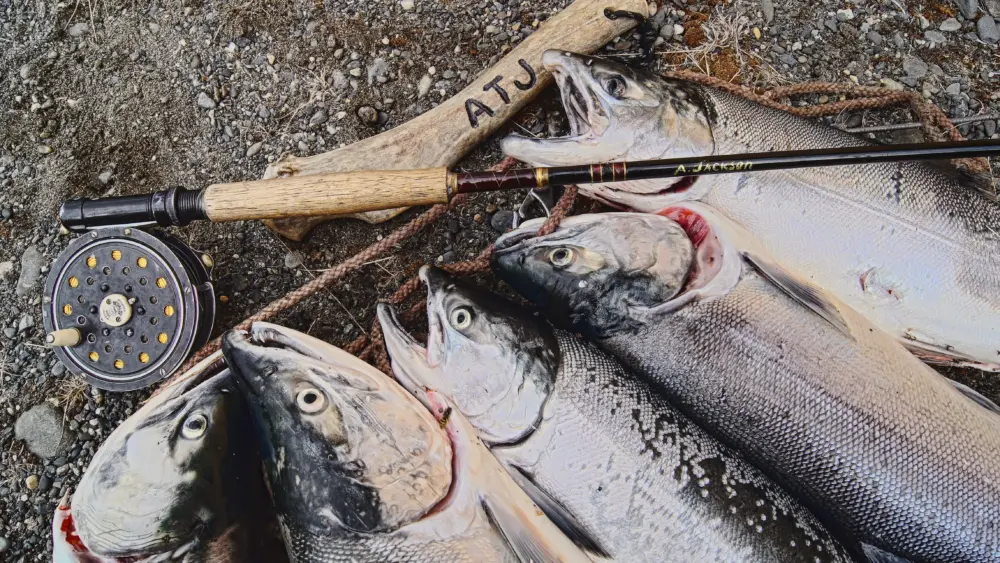
The summer fishery, held June 7 and 8, was open from the California-Oregon border down to the U.S.-Mexico border. It had a harvest guideline of 7,000 Chinook salmon. Anglers caught close to 9,165 salmon. Since the guideline was exceeded, Fish & Wildlife closed the remaining days for summer. The fall fishery lasted from Sept. 4 through 7. It was open between Pt. Reyes and Pt. Sur. It had a harvest guideline of 7,500 Chinook salmon. Anglers caught approximately 12,000 Chinook salmon. This resulted in Fish & Wildlife closing the other planned dates for fall.
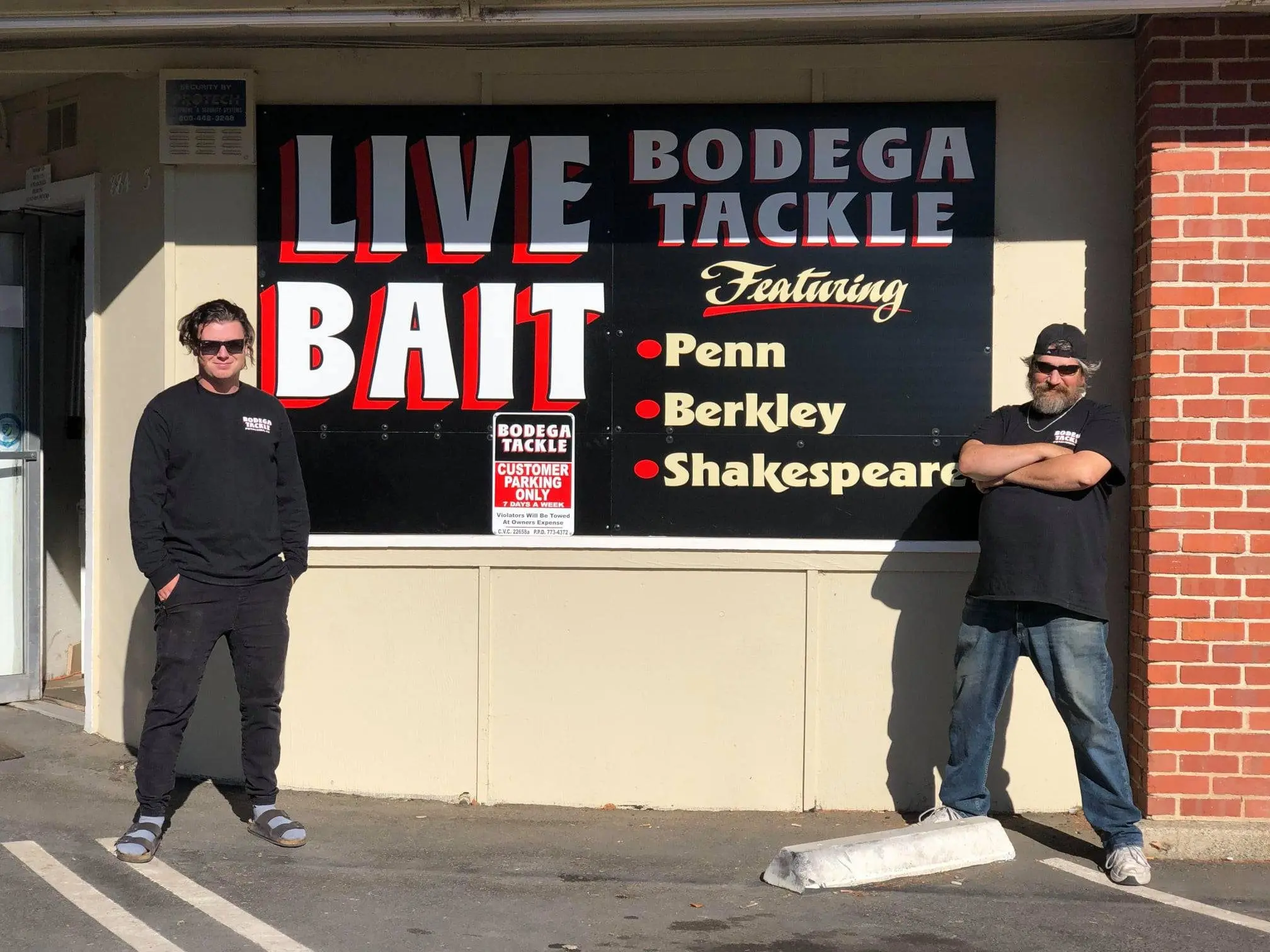
“The little bit of salmon seasons this year helped. I saw inventory move off the shelves which had been there for a while. But in the two years that the salmon fisheries were closed, I had to apply for loans to keep the business open,” says Kennith Brown, owner of Bodega Tackle in Petaluma.
Brown says in the past few years, many “mom and pop” fishing-related stores in the North Bay have closed. This is partly due to the fact that federal funds were not distributed to these stores in 2023 and 2024.
“They did offer the funds in 2008 and 2009, when the recreational ocean salmon fisheries closed in those years. That’s how we got through. Now, only charter fishing boats and commercial fishermen get assistance,” says Brown.
The issue of who receives assistance has frustrated the fishing business community. Many fish-related business owners are in close contact. Some stores that sell gear have relationships with charter boat captains.
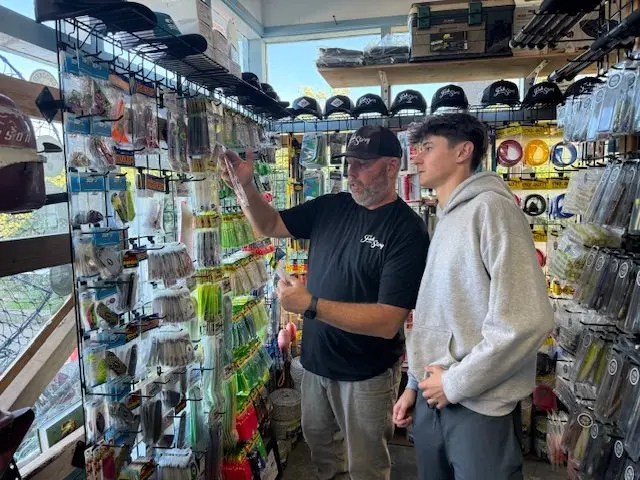
“We tell customers who are looking for charter boats about a few captains or boats that we know. We don’t usually sell charter boats bait, though,” says Matt Cronin, owner of Fish Story in Novato.
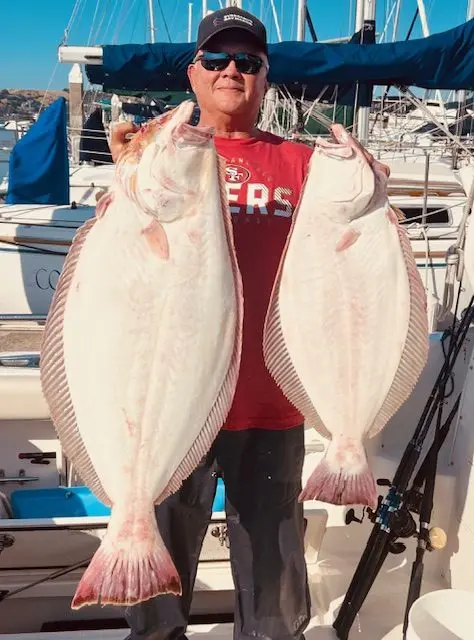
Another issue that arises when there is a limited or closed salmon season is that anglers and recreational fishing boat captains come to focus on other species. For example, during the two-year recent recreational ocean salmon fishery closure, recreational fishing boat captains tended to target California halibut.
“This puts pressure on the “second and third choice” fish species. Then CDFW considers reducing the take limit for those fish, which means even more people are unhappy,” says Havlicek.
Effects of a ‘boom or bust’ cycle
Since North Bay businesses recently had two limited open fisheries, they are still assessing what it means to deal with a “boom or bust” cycle.
As soon as the dates for the summer and fall fisheries were announced, Havlicek’s phone was ringing off the hook. He was quickly booked up for all the open days, with a wait list in case there were more.
Fish Story sold 60 cases of bait in the four days of the fall salmon fishery, more than it had in months.
FishingBooker, a Belgrade, Serbia-based business to book charter fishing boats, saw a 30% increase in completed trips in the past year. This occurred in coastal locations in northern California where it runs trips. The list of spots included Bodega Bay, Sausalito and San Francisco.
“The three previous years [between 2021 and 2024] saw slight drops or stagnation in terms of booking counts,” says Joris Zantvoort, head of content and public relations for FishingBooker.
The past fisheries closures and current federal tariffs have led to some unusual circumstances regarding inventory.
“In 2023, a lot of the fishing stores weren’t informed about the salmon fishery closure until it was too late. As a result, they were stuck with tens of thousands of items they had to sit on for two years. Fortunately, items like that don’t expire,” says Troy Maggy, a sales rep for Tackle Technology, a Sacramento-based fishing gear business.
The upshot was a loss of funds for the wait period. Gear and tackle shops did not have the opportunity to turn over and multiply the money through sales.
“This year’s fisheries were a welcome shot in the arm. They could move that inventory. Plus, several years ago, when the dollar was worth more and there weren’t tariffs, they’d bought those items at a lower price. But I’m sure they would rather have had the money, especially during these past two years,” says Maggy.
The view from bigger suppliers
The North Bay is not alone in having fish-related businesses that are struggling. This phenomenon is occurring across northern California, north to the Oregon border and east to Sacramento.
“I supply over 700 stores, including many in the North Bay, with bait and tackle in California,” says Glenn Chadaris, owner of Left Coast Bait Company. Left Coast does business as Big Red Worm Company and is based in Elverta, a small city near Sacramento.
Chadaris is now starting a new venture to sell bait online in a broader region east of California.
“That’s because California no longer pays the bills,” says Chadaris.
“Historically, for decades, salmon was a resource that was just there. Businesses grew up around it. People were enthusiastic about everything to do with salmon fishing. Recreational fishermen from throughout California and beyond would travel to coastal areas just to get a chance to fish out on the ocean,” says Vance Staplin, executive director of Golden State Salmon Association (GSSA).
The Santa Rosa-based nonprofit advocates for salmon protection and salmon habitat restoration. Staplin also represents multiple lines of fishing and outdoor gear. In addition, he has worked as a fishing guide, especially for Chinook salmon, on the upper Sacramento River.
“Fishing-related businesses have never really recovered completely from the 2008 and 2009 closures. The question is what we do now, when there are fewer fish spawning and reaching the ocean. History has proven that operating our dams to provide cold, consistent flows is critical. That, along with modernizing hatcheries and habitat expansion can rapidly restore our salmon,” says Staplin.
Some guides and fishing-related businesses are advocating for more hatcheries. They believe this would mitigate overfishing and problems due to environmental issues.
Stone says there is a need for a fish hatchery on the main stem of the Sacramento River to mitigate the loss of naturally spawning fish and their offspring that do not survive due to the diversion of water from the river, which increases the water temperature. This negatively affects the habitat for many species of fish. Fish also die off because of a lack of available water in rivers and tributaries during droughts, and at times when the water quality is poor.
Building blocks emerge
The success of Fish Story, which opened in 2023, offers a few ideas for fishing-related businesses that want to establish themselves during this period.
The announcement of this year’s salmon fisheries spurred Cronin to redo the setup for the entire store—enabling him to move a great deal of inventory in approximately six days of sales.
“We saw sales up a 1000% during the September fishery. Next year, we hope salmon numbers will be up even more, so we’ll have close to a full fishery. If that happens, we’ll be ready, in terms of ordering more supplies,” says Cronin.
Cronin also learned to get “tons of lures” in stock—from hoochies, the rubber version of an octopus or squid, to flashers, shiny lures that come in a wide variety of colors and patterns.
“We had everything, including dodgers, which look like giant spoons or oval blades, to attractor flies, which look like large flies, sometimes with stripes. I’ve been fishing all my life. I had to learn through selling lures that there’s no one way to fish for salmon,” says Cronin.
Cronin says talking to customers and sales data from the past two years have also showed him where his customers are based. Eighty percent of his customers are from Petaluma and other areas of southern Sonoma County, and Marin County. The other 20% come in from the East Bay and San Francisco.
One of the things Cronin has been working on since opening day is encouraging fishing among young people.
“I coach Little League and the players on my team found out I fish. When the word got out, a ton of kids started to come in,” says Cronin.
Now he sees players texting him what they caught and asking questions, in the store and out. They want to know what lures work and what it’s like to fish for different species, including Chinook salmon.
“Pair that interest with good communication and good customer service. Add a wide selection of what people want. That’s when you’ll get people on board. You’ll see salmon become important to even more people,” says Cronin.